Umberto Eco as a foreign agent: Quantitative Analysis of signs of Fascism in Russian Mass Media (2011–2024)#
Alexander Smoljanski
DOI 10.55167/77a2df541ae0
Abstract: This study explores the transformation of the Russian political regime from 2011 to 2024 by examining whether it has adopted characteristics of fascism, as described by Umberto Eco in his essay “Eternal Fascism: Fourteen Ways of Looking at a Blackshirt.” We used the Integrum Worldwide database to conduct a sociolinguistic analysis, tracking the rise of 14 signs of fascism in Russian mass media over this period. All collected and included data, tables, and observed trends indicate an increasing resemblance of the Russian regime to fascism in Umberto Eco’s terms.
Introduction#
The question of whether Russia’s current political regime bears similarities to the fascist regimes of the 20th century has been a topic of growing interest. This research aims to investigate this hypothesis through a sociolinguistic analysis, guided by the 14 characteristics of fascism outlined by Umberto Eco and the characteristics offered by the Russian Academy of Sciences (RAS), which define fascism as the ideology and practice asserting the superiority and exclusivity of a particular nation or race, denying democracy, establishing a cult of leadership, and using violence and terror against political opponents and dissent.
Research Objective#
To investigate the hypothesis of the similarities between the current Russian regime and European fascist regimes, primarily based on Eco’s and RAS’s frameworks.
A Brief Description of the Research#
Methodology: Sociolinguistic analysis of the frequency of words and expressions specific to the 14 signs of fascism in Russian mass media.
Research Period: 2011–2024.
Research Tool: Integrum Worldwide databases.
Research Tools of Integrum Worldwide#
The research utilized the Integrum Worldwide database, the world’s largest archive of mass media from Russia and the former USSR, containing 120,000 databases with over 3 billion documents and 700,000 new documents added daily.
The table below provides detailed statistics on 23,308 databases of Russian mass media used specifically in this study:
Table 1#
| Category of Mass Media | Number of Mass Media Titles (Databases) |
|---|---|
| Total | 23,308 |
| Moscow Newspapers and Magazines | 429 |
| Federal News Agencies | 97 |
| Federal Internet Publications | 5,737 |
| Federal TV and Radio | 133 |
| Regional Newspapers and Magazines | 1,784 |
| Regional News Agencies | 238 |
| Regional Internet Publications | 14,401 |
| Regional TV and Radio | 489 |
Theoretical Framework#
Umberto Eco’s 14 signs of fascism outlined in 2015:#
- The cult of tradition
- Irrationality and rejection of modernity
- Action without reflection
- Treating doubt as betrayal
- Xenophobia and racism
- Reliance on the middle class
- Obsession with conspiracy theories
- Portraying the enemy as both powerful and weak
- Viewing life as a continuous war
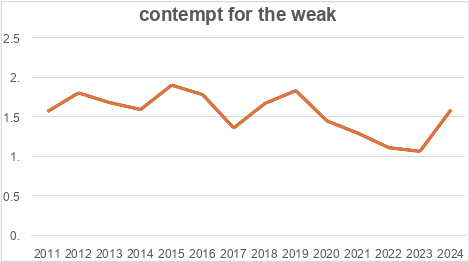
- Contempt for the weak
- The cult of heroes and death
- Machismo and sexism
- Rejection of parliamentarism
- The use of Newspeak
Description of Fascism by the Russian Academy of Sciences outlined in 1995#
According to the Russian Academy of Sciences, fascism is defined as an ideology and practice that:
- Asserts the superiority and exclusivity of a nation or race
- Incites national intolerance
- Justifies discrimination against other peoples
- Denies democracy
- Establishes a cult of a leader
- Uses violence and terror to suppress political opponents and dissent
- Justifies war as a means of solving interstate problems
As we can see, all the signs of fascism defined by the Russian Academy of Sciences correspond to one or another sign of fascism formulated by Umberto Eco.
Methodology#
The number of documents in the analyzed databases is constantly increasing. This is the reason why, in addition to examining the absolute number of relevant documents, their relative frequency—the ratio of the relevant documents to the total number of documents in the databases in the respective year—serves a particular interest. In fact, that parameter represents the share of each concept under study in the Russian media space.
A relevant document is counted only once in the statistics, even if the keywords are mentioned in the document more than once.
A small number of relevant documents contain keywords in non-relevant contexts. Still, we assume that the percentage of irrelevant contexts does not change much from year to year and, therefore, does not significantly affect the dynamics of relative statistics.
Three search queries and corresponding graphs illustrate each of Eco’s characteristics of fascism. The result of each query is illustrated by one mass media document. The exceptions are Sign 12 and Sign 14, where it was necessary to make not three but four illustrations for the analyzed signs of fascism.
The results of the 2024 survey are extrapolated from data from the first half of the year.
Statistics of fascist signs in Russian media#
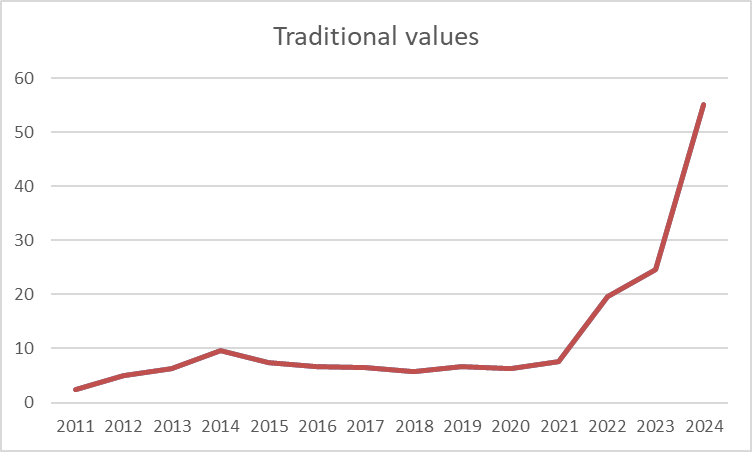
Here are the results of the study of the Sign 1. The cult of tradition / Культ традиции.
Statistics and graphs of all characteristics of fascism are in Appendix 1.
Sign 1. The cult of tradition / Культ традиции#
Table 2#
| Concept | Search query |
|---|---|
| traditional values / традиционные ценности | “традиционные ценности” (россия или российский) /n |
| spiritual and moral values/духовно-нравственные ценности | (“духовные ценности” или “духовно-нравственные ценности” или “нравственные ценности”) (россия или российский) /n |
| Ancestral heritage/наследие предков | ((отцы или деды или предки) (“завещали нам” или “оставили в наследство” или “оставили нам в наследство” или наследие или традиция) /n) или “наши отцы” или “наши деды” или “наши предки” |
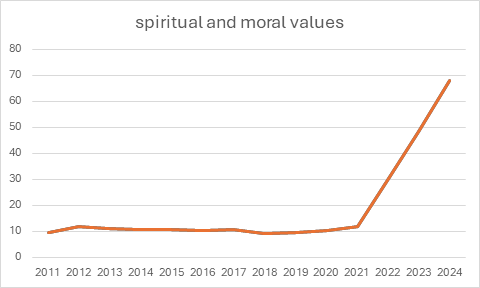
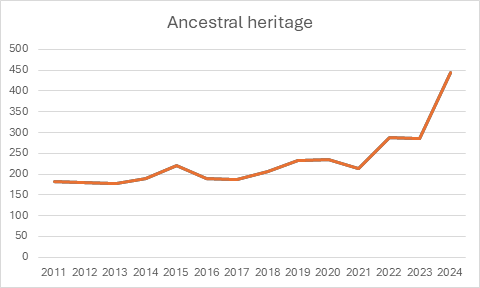
Table 3. Frequency of concepts “traditional values”, “spiritual and moral values”, and “ancestral heritage” by year (number of relevant documents)#
| Year | Traditional values | Spiritual and moral values | Ancestral heritage |
|---|---|---|---|
| 2011 | 483 | 1907 | 37318 |
| 2012 | 1286 | 3039 | 45779 |
| 2013 | 1952 | 3426 | 54310 |
| 2014 | 3245 | 3550 | 63811 |
| 2015 | 2674 | 3807 | 80108 |
| 2016 | 2496 | 3886 | 70579 |
| 2017 | 2471 | 4098 | 71172 |
| 2018 | 2627 | 4180 | 94058 |
| 2019 | 3106 | 4360 | 107476 |
| 2020 | 3310 | 5367 | 124788 |
| 2021 | 3939 | 6109 | 111245 |
| 2022 | 9413 | 14579 | 137782 |
| 2023 | 11131 | 21839 | 129284 |
| 2024 | 16966 | 20983 | 136687 |
Examples of the relevant documents#
Pic. 1#

Pic. 2#

Pic. 3

Relative frequency of concepts #
Diag. 1. Traditional values#
Diag. 2. Spiritual and moral values#
Diag. 3. Ancestral heritage#
Commentary#
1. Absolute number of relevant documents#
It is essential to pay attention to the dynamics of the relative frequency of mentioning the studied concepts and also to the absolute number of their references in mass media.
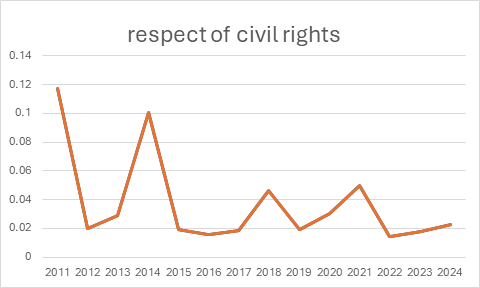
A good illustration is the number of references to the concept of respect for civil rights.
In 2011, this word combination was mentioned only 24 times in all Russian mass media (i.e., in more than 20 million documents analyzed in this study). That is, the concept was mentioned on average only twice a month. In 2024, it was mentioned even less frequently: only 7 times, i.e., approximately once every two months.
Table 4. Respect for civil rights (number of relevant documents)#
| Year | Number of Relevant Documents |
|---|---|
| 2011 | 24 |
| 2012 | 5 |
| 2013 | 9 |
| 2014 | 34 |
| 2015 | 7 |
| 2016 | 6 |
| 2017 | 7 |
| 2018 | 21 |
| 2019 | 9 |
| 2020 | 16 |
| 2021 | 26 |
| 2022 | 7 |
| 2023 | 8 |
| 2024 | 7 |
2. Increase in the absolute and relative frequency of all analyzed signs of fascism over the 2011–2024 period#
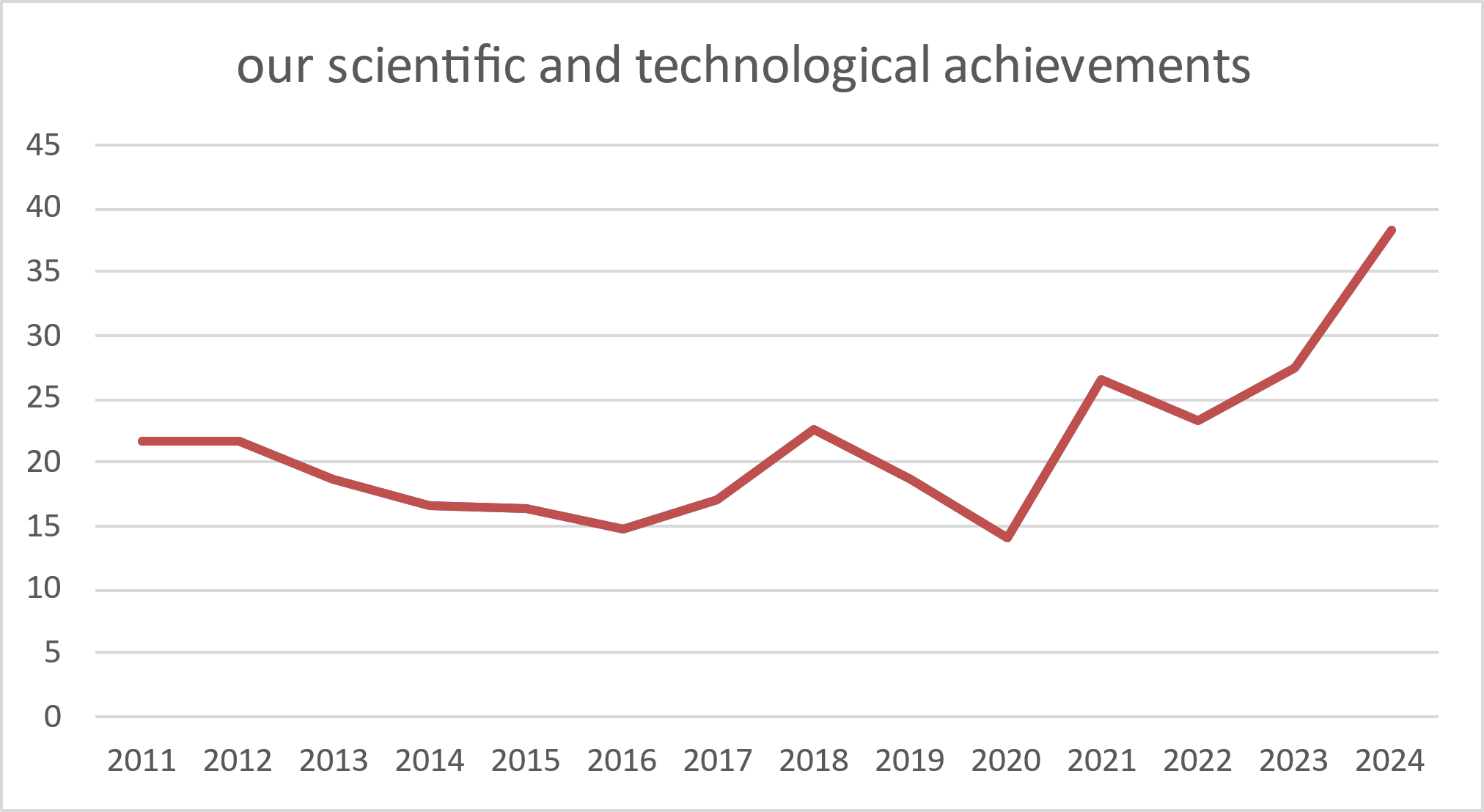
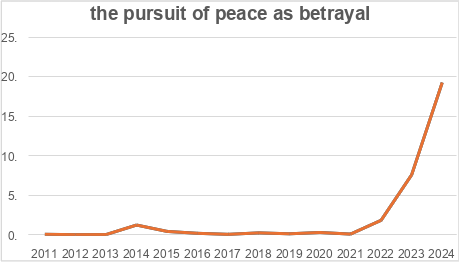
Absolute and relative frequencies of almost all analyzed signs increased from 2011 to 2024.
The frequencies of the following signs have grown significantly, suggesting that they are particularly characteristic of the Russian regime in the period under study:
- traditional values (see diag. 1)
- spiritual and moral values (see diag. 2)
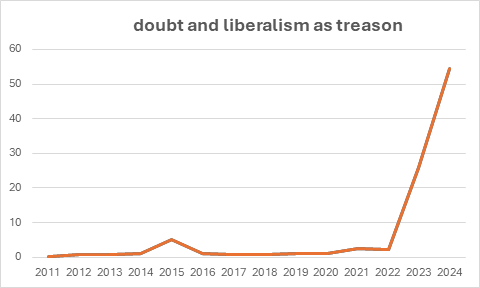
- doubt and liberalism as treason (see diag. 10)
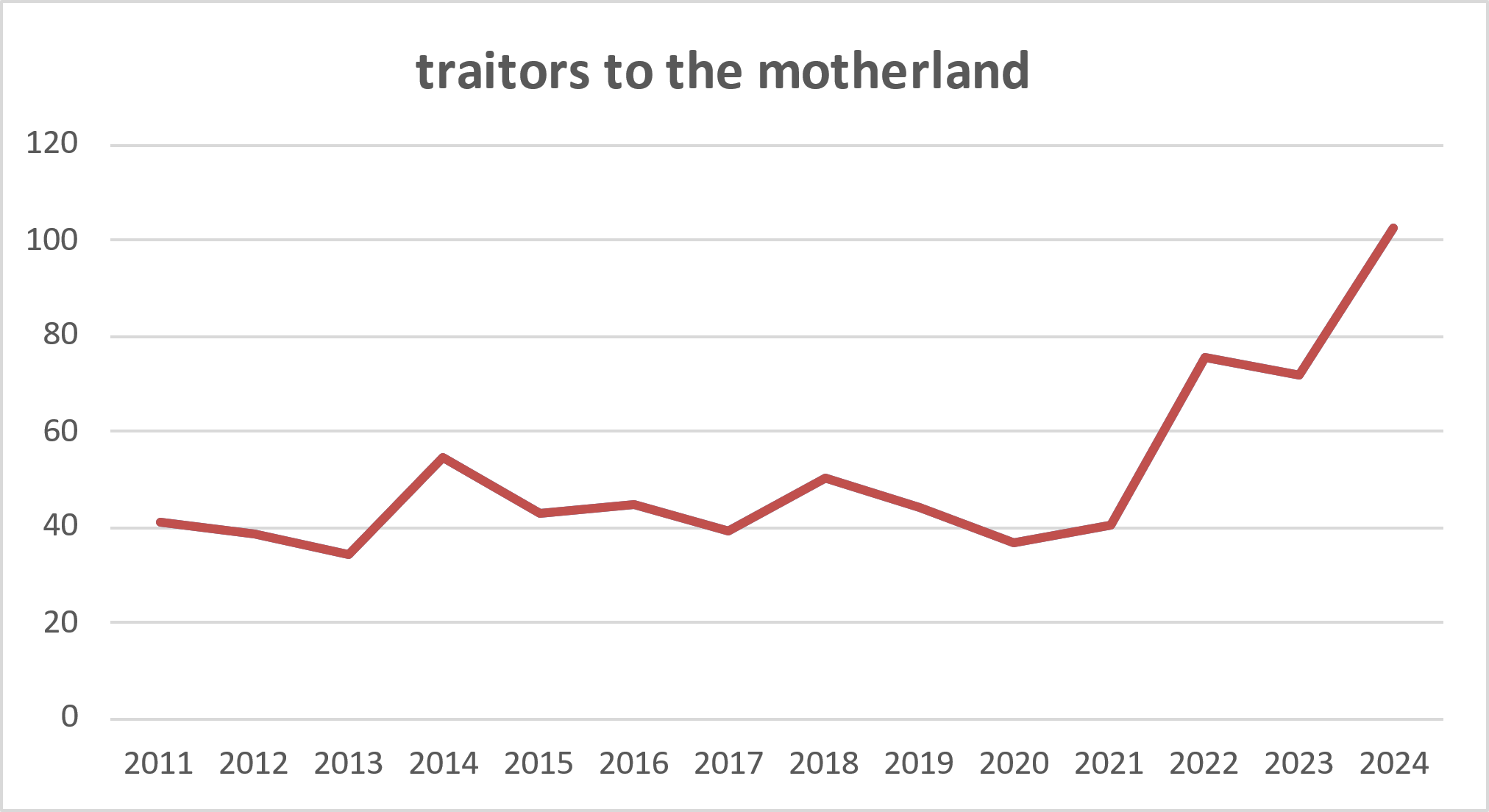
- traitors to the motherland (see diag. 12)
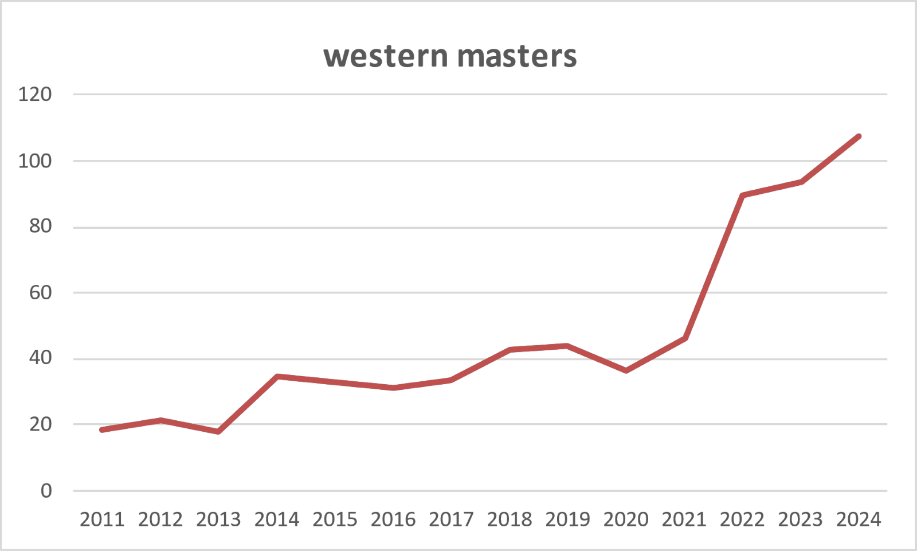
- Western masters (see diag. 20)
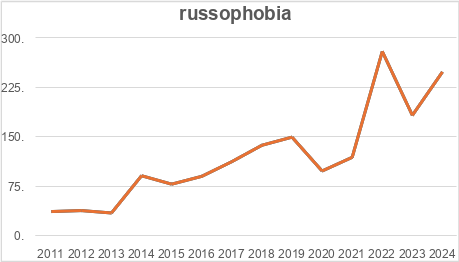
- Russophobia (see diag. 21)
- the pursuit of peace as betrayal (see diag. 26)
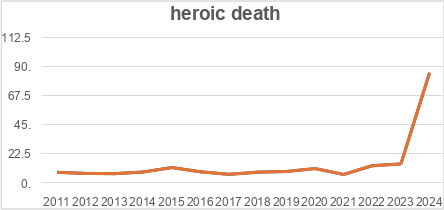
- heroic death (see diag. 33)
3. A noticeable decrease in frequency is demonstrated by concepts traditionally regarded as suspicious by fascist regimes:#
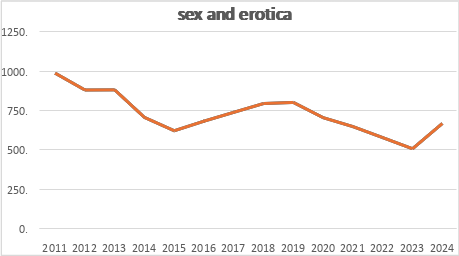
- sex and erotica (see later diag. 37)
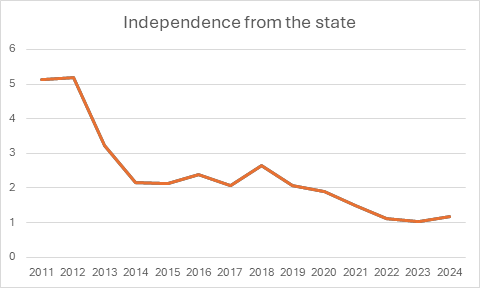
- independence from the state (see later diag. 5)
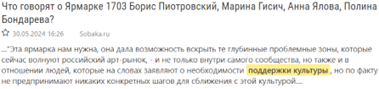
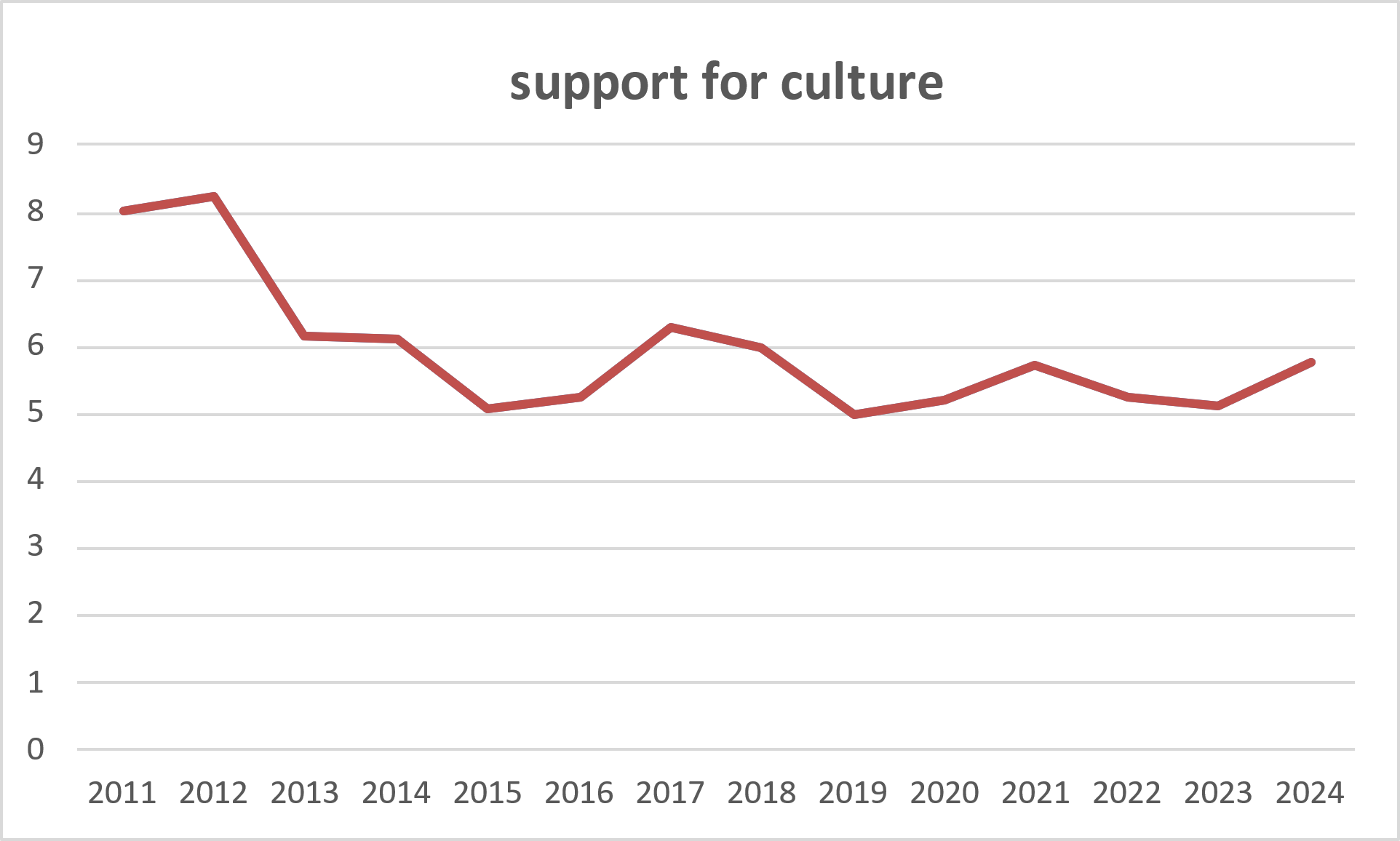
- support for culture (see later diag. 8)
4. Newspeak#
The detailed statistics and graphs related to Newspeak are presented in Appendix 1 as Sign 14. Usage of Newspeak / Использование Новояза.
Using Newspeak often does not create new meanings of reality but increases confusion, i.e., the act of speaking becomes more important than its meaning.
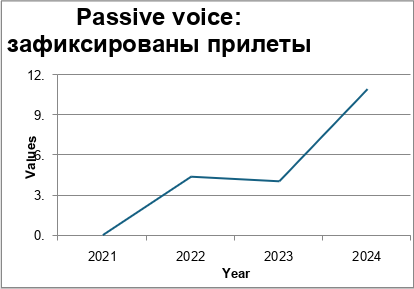
The frequency of the passive voice’s usage has significantly increased over the years (see later Table 31, Diag. 44).
5. Correlation between the frequency of signs of fascism in the media space and in real life#
Statistics of the signs and their dynamics are quite distinctly linked to political and economic events, as seen in the list of “Main Events of the Year” chosen by the official news agency RIA NOVOSTI (see Appendix 2).
The similarity between patriotic Z-art and fascist art of the 20th century#
A fictional Russian poet, Gennady Rakitin, created by an anti-war activist, has been publishing “patriotic” poems about war, Russia, and the “people’s leader” on his VKontakte page for about a year.
His poems have entered contests, been awarded prizes at festivals, and were reposted in Z-poetry channels. Nearly a hundred Russian Duma deputies and senators have subscribed to Rakitin’s page. Later, it turned out that Rakitin’s verses were translations of poems published in Nazi Germany in the 1930s and 1940s.
Almost verbatim similarities between Russian and Nazi propaganda#
A good example is the commentary of the Tsargrad TV channel on the Russian missile attack on Ukraine’s largest children’s hospital, OHMATDET, published on July 8, 2024 (https://tsargrad.tv/articles/detskaja-bolnica-v-kieve-ne-sluchajnost-pora-jeto-priznat-i-perestat-bojatsja_1025063):
You must realize — simple and scary: there are no humans on the other side. Not a single human being. Our missiles do not kill people. Not a single human being. There are no people there.
You do not have to make excuses for hitting a children’s hospital. We need to say, do you want it to stop? Surrender. Capitulate.
Conclusion#
If we use Umberto Eco’s signs and characteristics of fascism, the study results suggest that between 2011 and 2024, the Russian regime has increasingly resembled a fascist one.
Umberto Eco argues that the presence of even one of these 14 characteristics of fascism is enough for the fascist nebula to start condensing.
There is good reason to believe that if Umberto Eco published his signs of fascism today, he would be recognized as a foreign agent in modern Russia.
Appendix 1. Statistics and graphs of all 14 signs of fascism#
Sign 1 is discussed above in the text of the article.
Sign 2. Irrationality: admiration for technology but rejection of modernity / Иррациональность: восхищение техникой, но неприятие модерна#
Table 5#
| Concept | Search query |
|---|---|
| our scientific and technological achievements / наши научно-технические достижения | (наши или российские или отечественные) (научные или технические или научно-технические) (достижения или успехи) /n |
| Independence from the state / независимость от государства | “независимость от государства” или “независимый от государства” |
| respect for civil rights / уважение гражданских прав | “уважение гражданских прав” |
Table 6. Frequency of concepts “our scientific and technological achievements”, “independence from the state”, and “respect for civil rights” by year (number of relevant documents)#
| Year | Our Scientific and Technological Achievements | Independence from the State | Respect for Civil Rights |
|---|---|---|---|
| 2011 | 4431 | 1050 | 24 |
| 2012 | 5536 | 1320 | 5 |
| 2013 | 5723 | 988 | 9 |
| 2014 | 5613 | 727 | 34 |
| 2015 | 5907 | 771 | 7 |
| 2016 | 5538 | 894 | 6 |
| 2017 | 6571 | 791 | 7 |
| 2018 | 10343 | 1201 | 21 |
| 2019 | 8711 | 956 | 9 |
| 2020 | 7463 | 1010 | 16 |
| 2021 | 13787 | 776 | 26 |
| 2022 | 11217 | 533 | 7 |
| 2023 | 12443 | 465 | 8 |
| 2024 | 11827 | 360 | 7 |
Examples of the relevant documents#
Pic. 4#

Pic. 5#

Pic. 6#

Relative frequency of concepts#
Diag. 4. Our scientific and technological achievements#
Diag. 5. Independence from the state#
Diag. 6. Respect of civil rights#
Sign 3. Action without reflection, suspicious view of culture / Действие без рефлексии, подозрительное отношение к культуре#
Table 7#
| Concept | Search query |
|---|---|
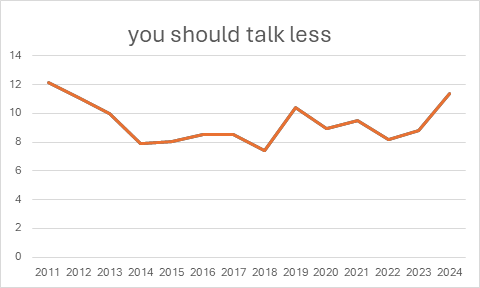
| you should talk less / болтать надо меньше | “меньше надо болтать” или “болтать надо меньше” или говорильня или “пустые разговоры” |
| support for culture / поддержка культуры | “поддержка культуры” |
| art experiments / эксперименты в искусстве | “эксперименты в искусстве” или “экспериментальное искусство” |
Table 8. Frequency of concepts “you should talk less”, “support for culture”, and “art experiments” by year (number of relevant documents)#
| Year | You Should Talk Less | Support for Culture | Art Experiments |
|---|---|---|---|
| 2011 | 2478 | 1640 | 197 |
| 2012 | 2838 | 2096 | 196 |
| 2013 | 3074 | 1895 | 241 |
| 2014 | 2668 | 2069 | 164 |
| 2015 | 2927 | 1833 | 250 |
| 2016 | 3205 | 1965 | 136 |
| 2017 | 3249 | 2402 | 201 |
| 2018 | 3373 | 2730 | 348 |
| 2019 | 4815 | 2307 | 515 |
| 2020 | 4782 | 2763 | 216 |
| 2021 | 4937 | 2978 | 257 |
| 2022 | 3934 | 2515 | 193 |
| 2023 | 3994 | 2306 | 98 |
| 2024 | 3509 | 1780 | 125 |
Examples of the relevant documents#
Pic. 7#

Pic. 8#

Pic. 9#
Relative frequency of concepts#
Diag. 7. You should talk less#
Diag. 8. Support for culture#
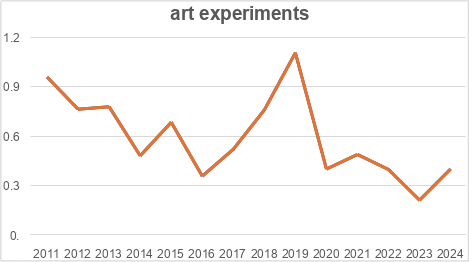
Diag. 9. Art experiments#
Sign 4. Doubt is viewed as betrayal or treason / Cомнение трактуется как предательство или измена#
Table 9.#
| Concept | Search query |
|---|---|
| doubt and liberalism as treason / сомнения и либерализм как предательство | (нацпредатели или национал-предатели или “национальные предатели” или “предатели родины” или изменники или иноагенты или “иностранные агенты” или “иностранная агентура” или “западная агентура” или “предатель России” или “предатель своей страны” или “предать свою страну” или “предать родину” или “предать нашу страну”) (болтать или болтовня или колебания или интеллигентский или “пустые разговоры” или либерал* или либерасты) /n |
| one must love the Motherland / надо Родину любить | “надо родину любить” или “надо любить свою родину” или “надо любить свою страну” или “надо любить Россию” или “надо любить отечество” или “надо любить свое отечество” |
| traitors to the motherland / предатели Родины | (предать или предатель) (родина или росси* или “наша страна”) /n |
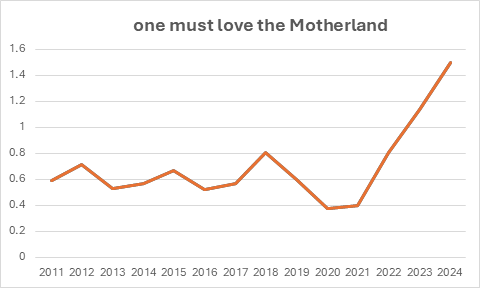
Table 10. Frequency of concepts “doubt and liberalism”, “one must love the Motherland”, and “traitors to the Motherland” by year (number of relevant documents)#
| Year | Doubt and Liberalism as Treason | One Must Love the Motherland | Traitors to the Motherland |
|---|---|---|---|
| 2011 | 35 | 120 | 8441 |
| 2012 | 211 | 181 | 9787 |
| 2013 | 218 | 163 | 10664 |
| 2014 | 351 | 192 | 18359 |
| 2015 | 1799 | 241 | 15687 |
| 2016 | 418 | 195 | 16876 |
| 2017 | 286 | 218 | 15140 |
| 2018 | 392 | 368 | 22888 |
| 2019 | 477 | 276 | 20511 |
| 2020 | 600 | 199 | 19682 |
| 2021 | 1284 | 207 | 21145 |
| 2022 | 1105 | 386 | 36151 |
| 2023 | 11679 | 514 | 32515 |
| 2024 | 16800 | 463 | 31690 |
Examples of the relevant documents#
Pic. 10#
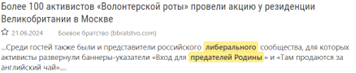
Pic. 11#

Pic. 12#

Relative frequency of concepts#
Diag. 10. Doubt and liberalism as treason#
Diag. 11. One must love the Motherland#
Diag. 12. Traitors to the Motherland#
Sign 5. Xenophobia, racism / Ксенофобия, расизм** #
Table 11#
| Concept | Search query |
|---|---|
| Asian visitors / приезжие азиаты | (выходцы или мигранты или приезжие или гастарбайтеры или понаехавшие) (“Средняя Азия” или азиаты)/n |
| Khohly (a disparaging name for Ukrainians) /хохлы | (хохлы или хохляцкий или хохляндия) не Хохлов |
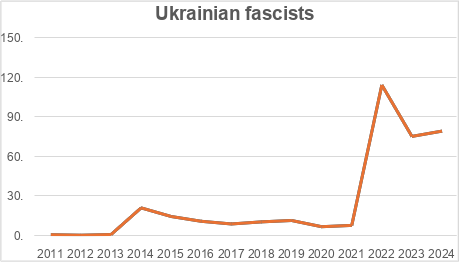
| Ukrainian fascists / украинские фашисты | укрофашисты или укронацисты или “украинские фашисты” или “украинские нацисты” или “украинские нацики” или “украинские бандиты” |
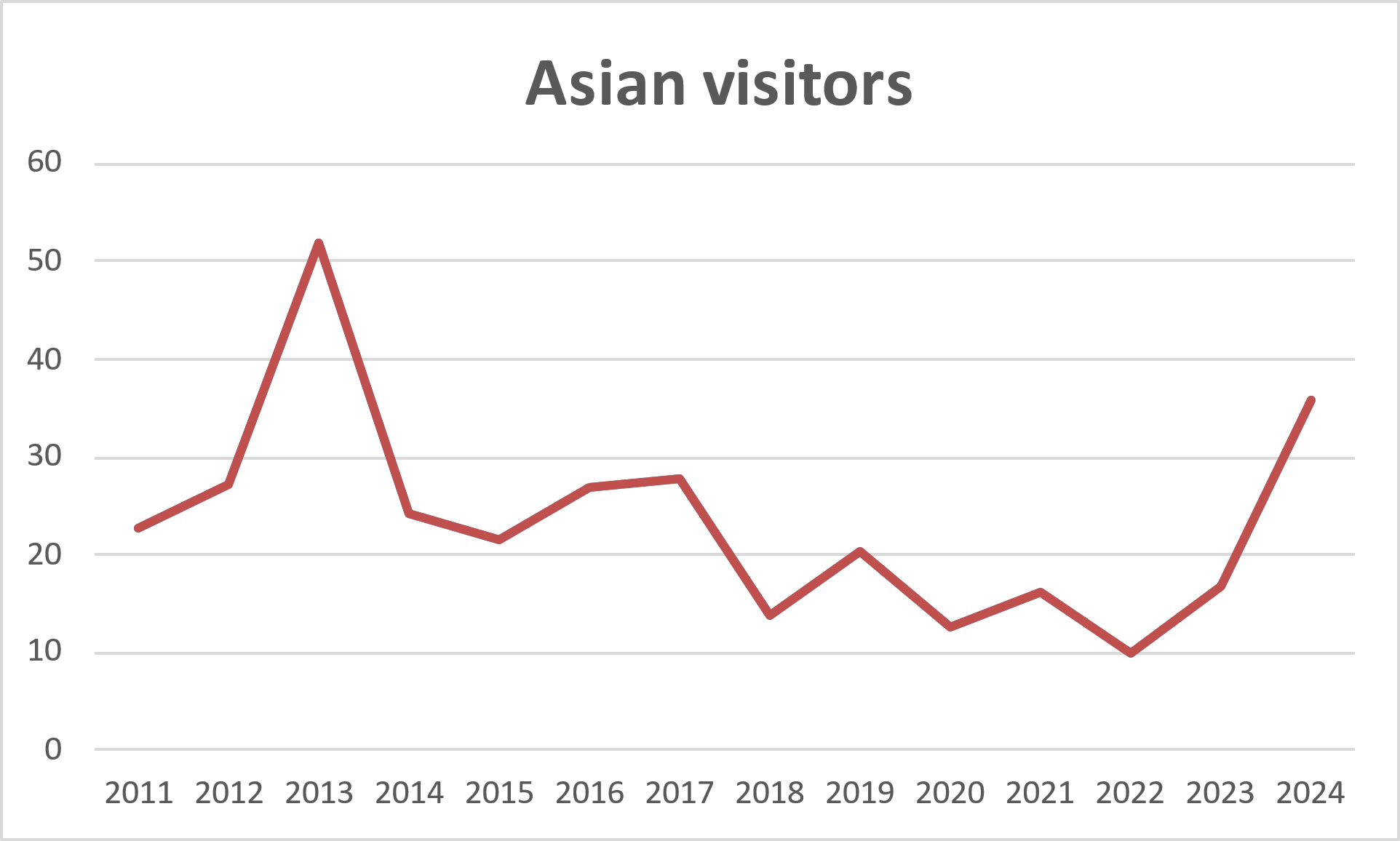
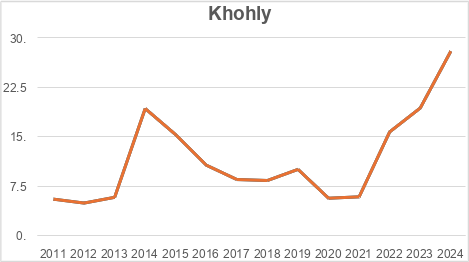
Table 12. Frequency of concepts “Asian visitors”, “Khohly”, and “traitors to the motherland” by year (number of relevant documents)#
| Year | Asian Visitors | Khohly | Traitors to the Motherland |
|---|---|---|---|
| 2011 | 4635 | 1156 | 212 |
| 2012 | 6893 | 1291 | 169 |
| 2013 | 15960 | 1826 | 360 |
| 2014 | 8138 | 6548 | 7225 |
| 2015 | 7802 | 5594 | 5390 |
| 2016 | 10084 | 4057 | 4213 |
| 2017 | 10607 | 3302 | 3518 |
| 2018 | 6290 | 3865 | 4915 |
| 2019 | 9371 | 4716 | 5489 |
| 2020 | 6658 | 3088 | 3796 |
| 2021 | 8416 | 3128 | 4223 |
| 2022 | 4723 | 7601 | 54925 |
| 2023 | 7495 | 8809 | 34198 |
| 2024 | 11009 | 8662 | 24547 |
Examples of the relevant documents#
Pic. 13#

Pic. 14#

Pic. 16#

Relative frequency of concepts #
Diag. 13. Asian visitors#
Diag.14. Khohly#
Diag. 15. Ukranian fascists
Sign 6. Reliance on the middle class / Опора на средний класс#
Table 13#
| Concept | Search query |
|---|---|
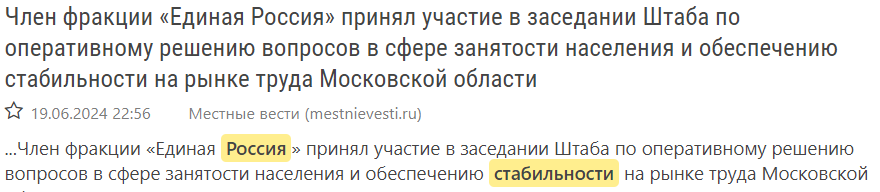
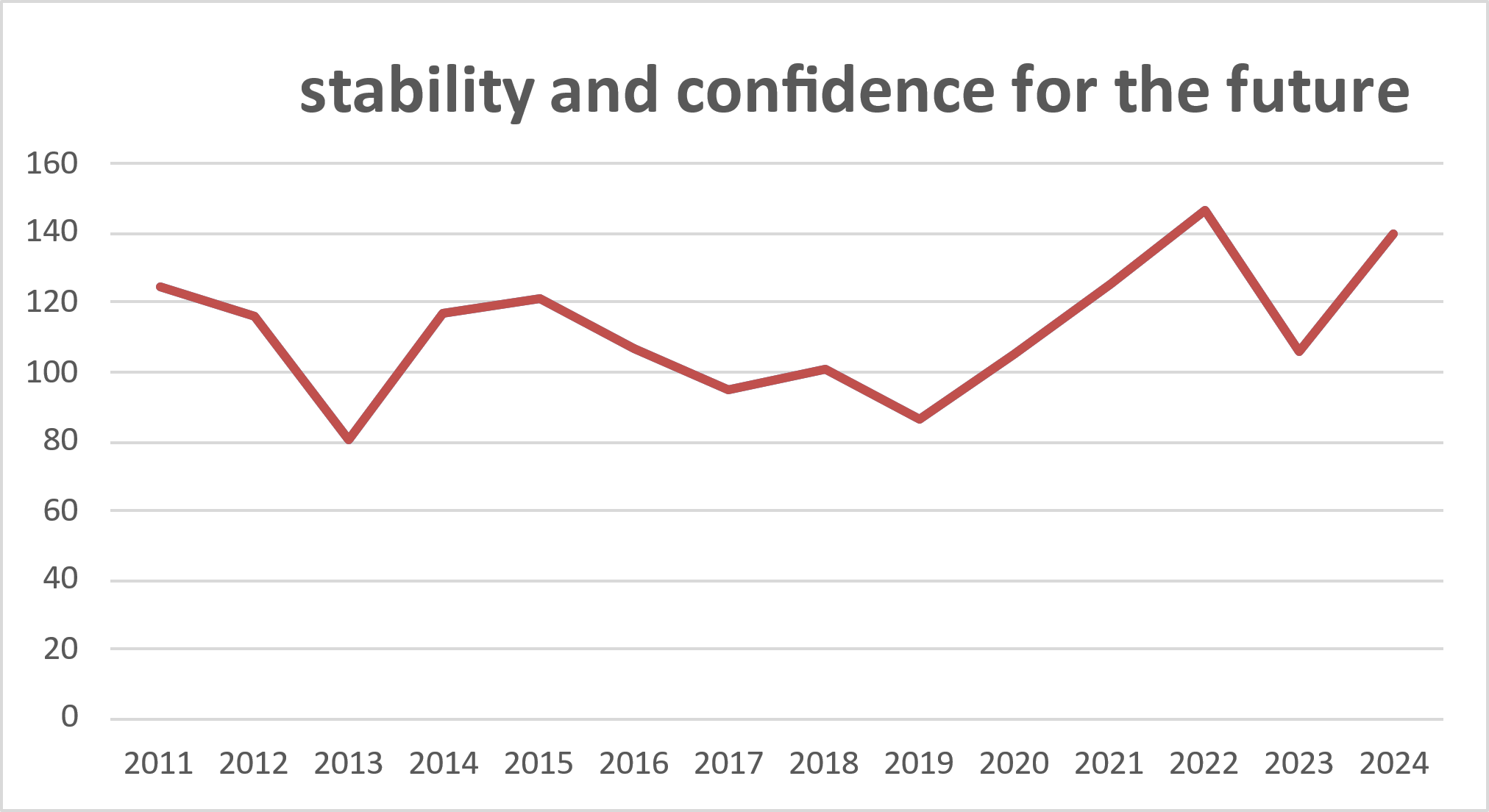
| stability and confidence for the future / стабильность и уверенность в будущем | (стабильность или “уверенность в завтрашнем дне” или “уверенность в будущем”) и (русский или росси*)/n |
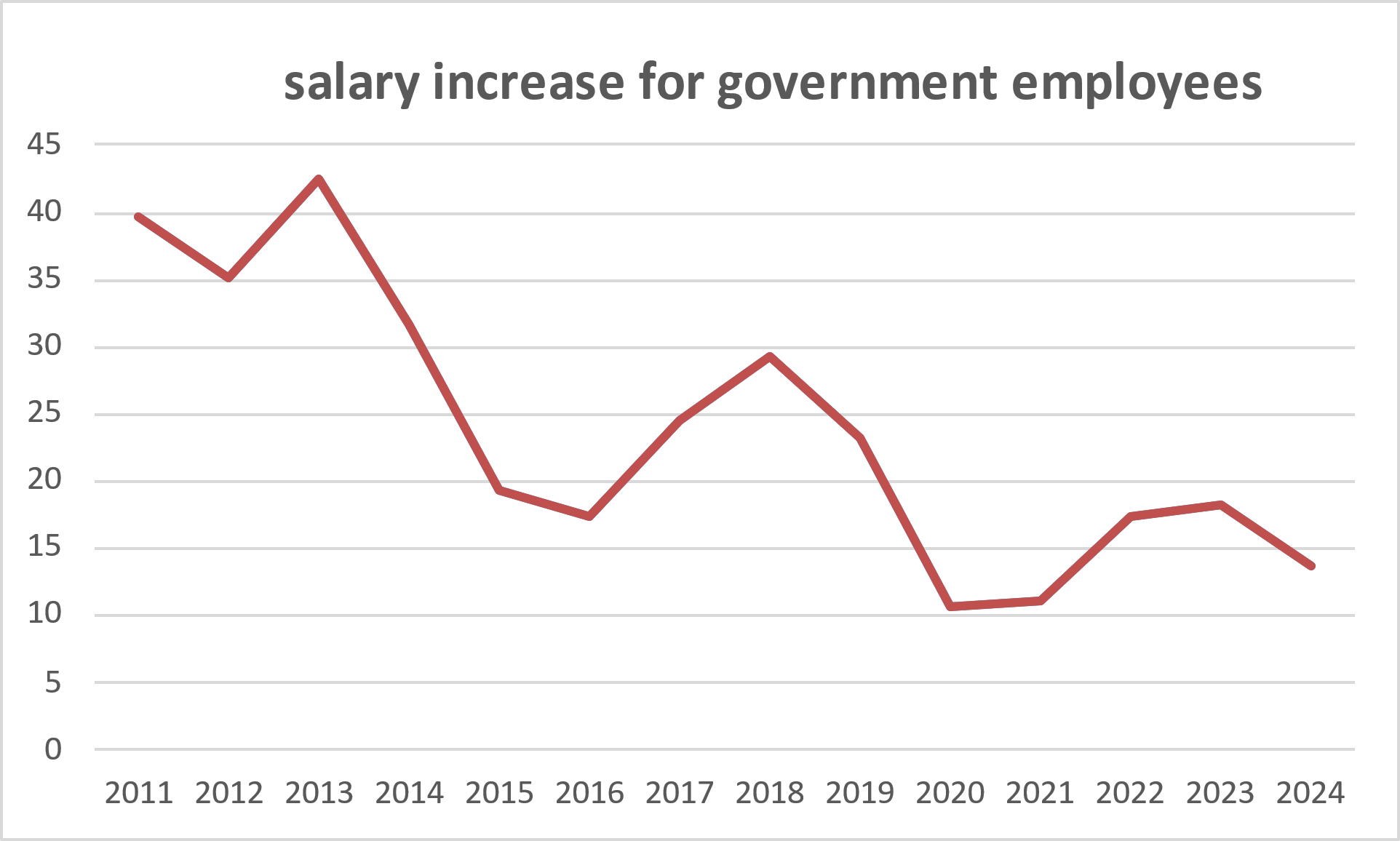
| salary increase for government employees / повышение зарплат госслужащим | (госслужащие или бюджетники или “государственные служащие”) (зарплата или “социальные выплаты” или “оплата труда” или доходы) (повышение или увеличение или рост) /n |
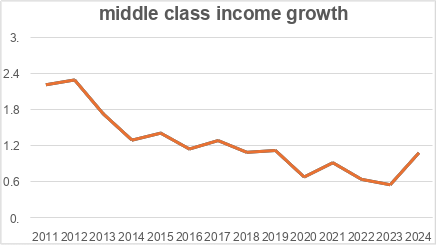
| middle class income growth / рост доходов среднего класса | “средний класс” ( зарплата или “социальные выплаты” или “оплата труда” или доходы) (повышение или увеличение или рост) /n |
Table 14. Frequency of concepts “stability and confidence for the future”, “salary increase for government employees”, and “middle-class income growth” by year (number of relevant documents)#
| Year | Stability and Confidence for the Future | Salary Increase for Government Employees | Middle-Class Income Growth |
|---|---|---|---|
| 2011 | 25401 | 8093 | 455 |
| 2012 | 29500 | 8954 | 588 |
| 2013 | 24687 | 13080 | 536 |
| 2014 | 39565 | 10643 | 441 |
| 2015 | 43867 | 7009 | 516 |
| 2016 | 40106 | 6544 | 435 |
| 2017 | 36207 | 9359 | 497 |
| 2018 | 45978 | 13315 | 503 |
| 2019 | 40225 | 10711 | 526 |
| 2020 | 55770 | 5622 | 370 |
| 2021 | 65469 | 5775 | 485 |
| 2022 | 70281 | 8310 | 314 |
| 2023 | 47823 | 8193 | 256 |
| 2024 | 43065 | 4222 | 338 |
Examples of the relevant documents#
Pic. 17#
Pic. 18#

Pic. 19.#

Relative frequency of concepts#
Diag. 16. Stability and confidence for the future#
Diag. 17. Salary increase for government employees#
Diag. 18. Middle class income growth#
Sign 7. Obsession with conspiracy theories, cultivating a sense of being under siege / Одержимость теориями заговора, культивация чувства нахождения в осаде#
Table 15#
| Concept | Search query |
|---|---|
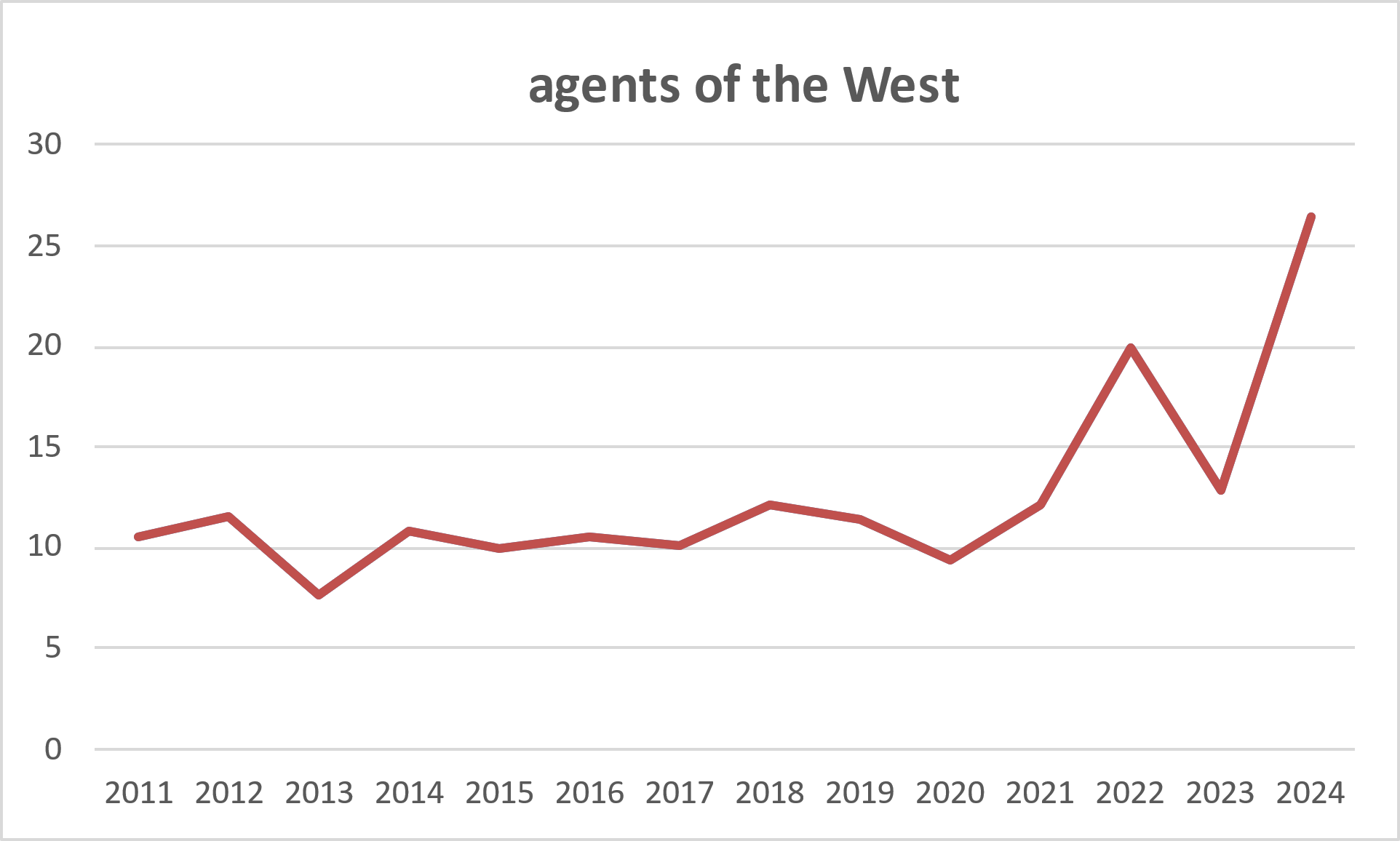
| agents of the West / агенты запада | “агенты влияния” или “под иностранным влиянием” или “под западным влиянием” |
| Western masters / западные хозяева | (западные или зарубежные или иностранные или заокеанские или американские или натовские) (кураторы или хозяева или кукловоды) /n |
| Russophobia / русофобия | русофоб* |
Table 16. Frequency of concepts “agents of the West”, “Western masters”, and “russophobia” by year (number of relevant documents)#
| Year | Agents of the West | Western Masters | Russophobia |
|---|---|---|---|
| 2011 | 2151 | 3821 | 7717 |
| 2012 | 2947 | 5437 | 10005 |
| 2013 | 2372 | 5531 | 10949 |
| 2014 | 3671 | 11735 | 31082 |
| 2015 | 3606 | 12034 | 28761 |
| 2016 | 3983 | 11673 | 34209 |
| 2017 | 3847 | 12853 | 43392 |
| 2018 | 5507 | 19420 | 63010 |
| 2019 | 5267 | 20284 | 69824 |
| 2020 | 5000 | 19509 | 52878 |
| 2021 | 6317 | 24119 | 62483 |
| 2022 | 9548 | 42815 | 134490 |
| 2023 | 5832 | 42430 | 83090 |
| 2024 | 8148 | 33103 | 76939 |
Examples of the relevant documents#
Pic. 20#

Pic. 21#

Pic. 22#

Relative frequency of concepts#
Diag. 19. Agents of the West#
Diag. 20. Western masters#
Diag. 21. Russophobia#
Sign 8. The enemy is portrayed as powerful to inspire fear and as weak to be defeated / Враг изображается как мощный, чтобы внушать страх, и как слабый, чтобы его можно было победить#
Table 17#
| Concept | Search query |
|---|---|
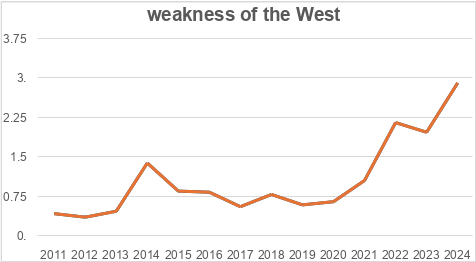
| weakness of the west / слабость запада | «бессилие запада» или “слабость запада” или “бессилие нато*” или “слабость нато*” или “упадок запада” или “деградация запада” |
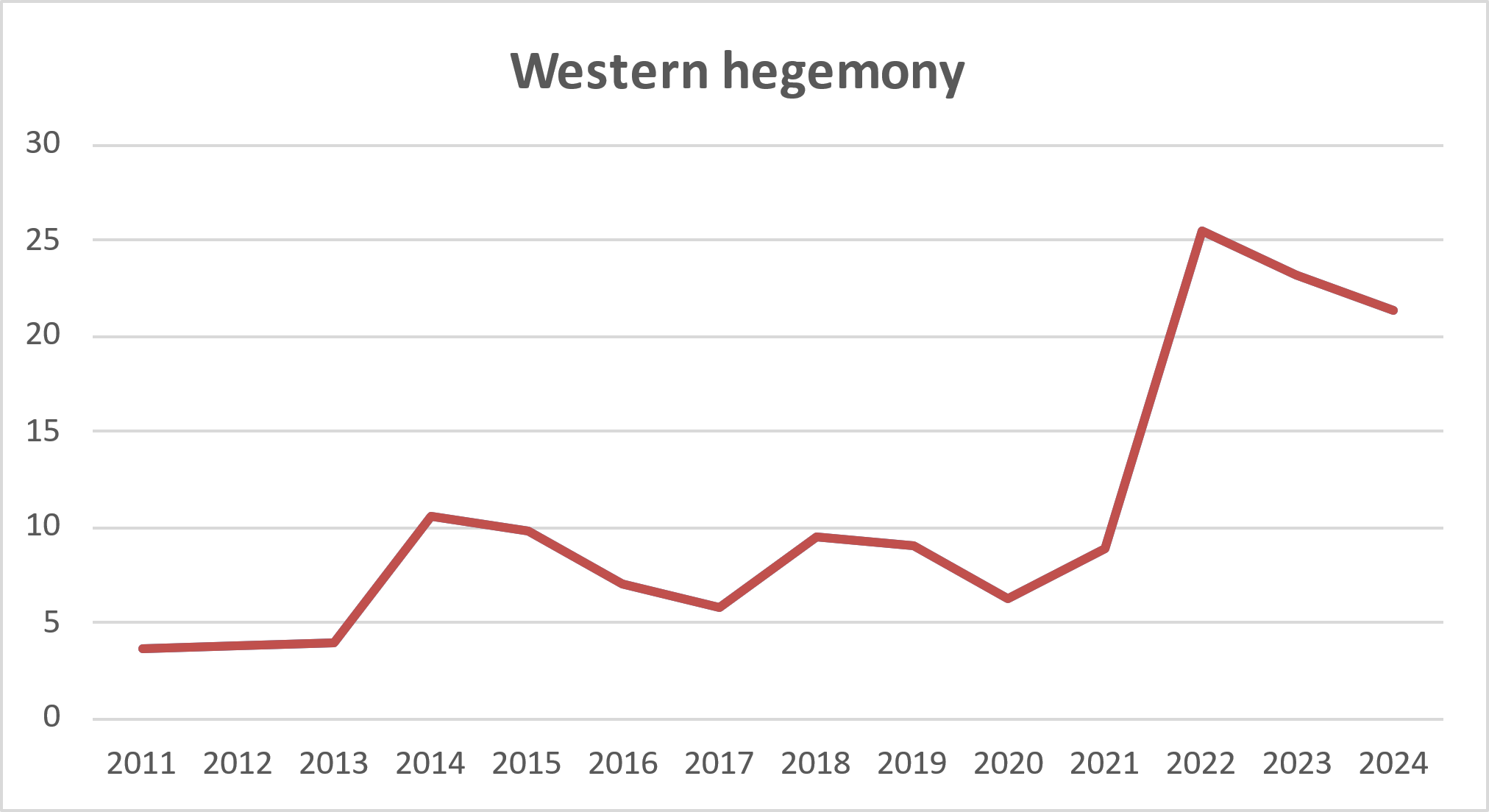
| U.S. and Western hegemony / гегемония США и запада | “американская гегемония” или “гегемония США” или “западная гегемония” или “гегемония запада” |
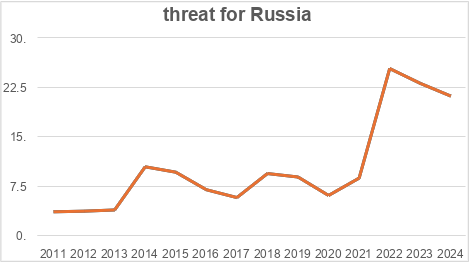
| threat for Russia / угроза для России | “разрушение россии” или “разрушение нашей страны” или “распад нашей страны” или “распад России” или “угроза россии” или “угроза нашей стране” или “угроза нашей безопасности” или “угроза безопасности России” или “угрожать России” или “угрожать нашей стране” или “угроза нашему государству” или “угроза нашей государственности” |
Table 18. Frequency of concepts “weakness of the West”, “U.S. and Western hegemony”, and “threat for Russia” by year (number of relevant documents)#
| Year | Weakness of the West | U.S. and Western Hegemony | Threat for Russia |
|---|---|---|---|
| 2011 | 89 | 766 | 5075 |
| 2012 | 94 | 980 | 4467 |
| 2013 | 148 | 1239 | 4309 |
| 2014 | 471 | 3569 | 11423 |
| 2015 | 313 | 3539 | 10445 |
| 2016 | 316 | 2664 | 9330 |
| 2017 | 217 | 2259 | 7273 |
| 2018 | 364 | 4350 | 9575 |
| 2019 | 279 | 4184 | 9455 |
| 2020 | 353 | 3317 | 6943 |
| 2021 | 554 | 4611 | 14633 |
| 2022 | 1036 | 12208 | 28001 |
| 2023 | 895 | 10506 | 14392 |
| 2024 | 898 | 6566 | 11258 |
Examples of the relevant documents#
Pic. 23#

Pic. 24#

Pic. 25#

Relative frequency of concepts#
Diag. 22. Weakness of the West#
Diag. 23. Western hegemony#
Diag. 24. Threat for Russia#
Sign 9. Life is regarded as a continuous war, and the pursuit of peace as cooperation with the enemy / Жизнь понимается как непрерывная война, а стремление к миру — как сотрудничество с врагом#
Table 19#
| Concept | Search query |
|---|---|
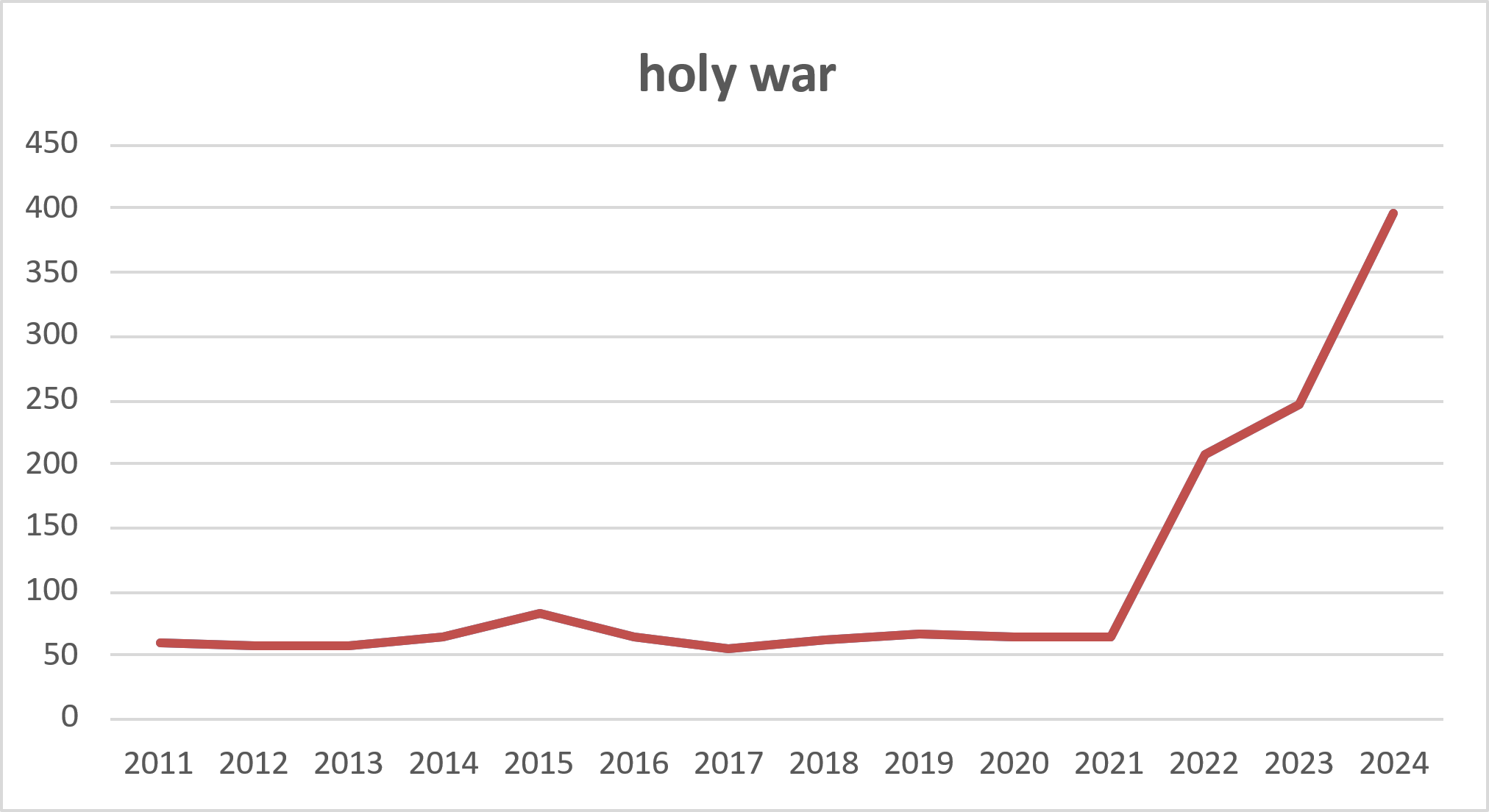
| holy war / священная война | “священная война” или “воин-освободитель” или “воинский долг” или “российский солдат-освободитель” или “наш солдат-освободитель” |
| the pursuit of peace as betrayal / стремление к миру как предательство | (пацифизм или пацифист или “выступать за мир” или “против войны” или антивоенный или “борец за мир” или “призыв* к миру” или перемирие или “мирный договор” или “остановить войну” или “остановить военные действия”) (предатель* или “агенты влияния” или “под иностранным влиянием” или “под западным влиянием” или “иностранные агенты” или иноагенты или “на руку врагам”)/n |
| a real man should serve / настоящий мужик должен служить | (“настоящий мужик” или “настоящий мужчина”) (военный или армия или офицер или отслужить или воевать) /n |
Table 20. Frequency of concepts “holy war”, “the pursuit of peace as a betrayal”, and “a real man should serve” by year (number of relevant documents)#
| Year | Holy War | The Pursuit of Peace as a Betrayal | A Real Man Should Serve |
|---|---|---|---|
| 2011 | 12188 | 41 | 712 |
| 2012 | 14837 | 39 | 950 |
| 2013 | 17585 | 51 | 1081 |
| 2014 | 21702 | 463 | 1246 |
| 2015 | 29925 | 205 | 996 |
| 2016 | 23940 | 122 | 1095 |
| 2017 | 21192 | 75 | 1070 |
| 2018 | 27948 | 174 | 1276 |
| 2019 | 31411 | 123 | 1596 |
| 2020 | 34401 | 229 | 1118 |
| 2021 | 33455 | 119 | 1426 |
| 2022 | 99677 | 944 | 1544 |
| 2023 | 111454 | 3491 | 2725 |
| 2024 | 122028 | 5976 | 2378 |
Examples of the relevant documents#
Pic. 26#

Pic. 27#

Pic. 28#

Relative frequency of concepts#
Diag. 25. Holy war#
Diag. 26. The pursuit of peace as betrayal#
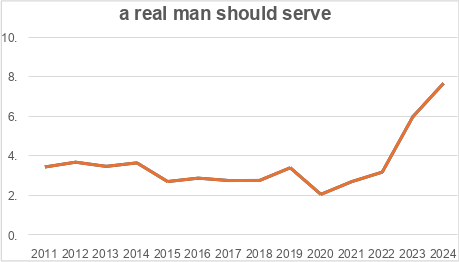
Diag. 27. A real man should serve#
Sign 10. Contempt for the weak / Презрение к слабым#
Table 21#
| Concept | Search query |
|---|---|
| wimp / слабак | слабак или размазня или слюнтяй или хлюпик |
| weakness and lack of will / слабость и безволие | слабость или слабак или безвольный или малодуш* или слабовол* или мягкотел* или бесхребетн* или слабохарактер* или бесхарактерн* или трусость или трусить |
| contempt for the weak / презрение к слабому | (слабость или слабак или слабый или безвольный или малодуш* или слабовол* или мягкотел* или бесхребетн* или слабохарактер* или бесхарактерн* или трусость или трусить) (презирать или презрение или “не уважать”) /n |
Table 22. Frequency of concepts “wimp”, “weakness and lack of will”, and “contempt for the weak” by year (number of relevant documents)#
| Year | Wimp | Weakness and Lack of Will | Contempt for the Weak |
|---|---|---|---|
| 2011 | 3261 | 69440 | 323 |
| 2012 | 4119 | 84834 | 463 |
| 2013 | 4663 | 91324 | 521 |
| 2014 | 6146 | 109361 | 542 |
| 2015 | 4832 | 104160 | 694 |
| 2016 | 5462 | 105749 | 673 |
| 2017 | 6343 | 105898 | 525 |
| 2018 | 6701 | 131823 | 766 |
| 2019 | 8716 | 161012 | 855 |
| 2020 | 8970 | 208642 | 779 |
| 2021 | 7108 | 196736 | 680 |
| 2022 | 5263 | 171932 | 538 |
| 2023 | 4385 | 155020 | 487 |
| 2024 | 5244 | 141747 | 494 |
Examples of the relevant documents#
Pic. 29#

Pic. 30#

Pic. 31#

Relative frequency of concepts#
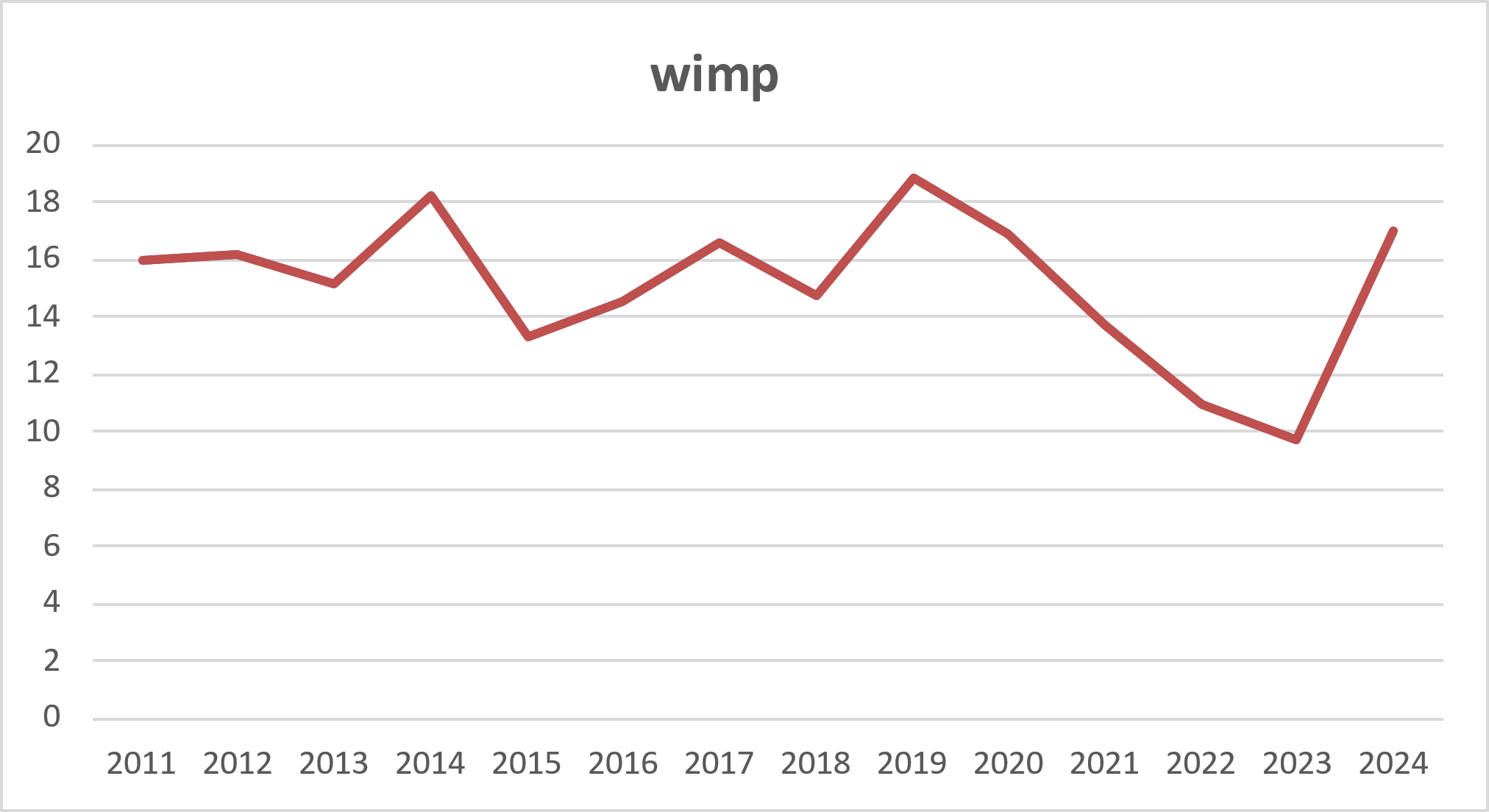
Diag. 28. Wimp#
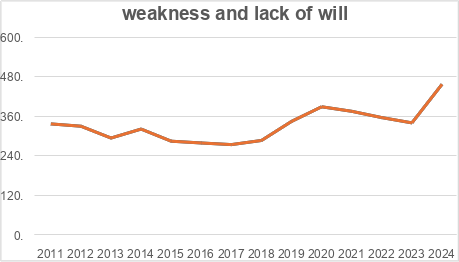
Diag. 29. Weakness and lack of will#
Diag. 30. Contempt for the weak#
Sign 11. The cult of heroes and the cult of death / Культ героизма и культ смерти#
Table 23#
| Concept | Search query |
|---|---|
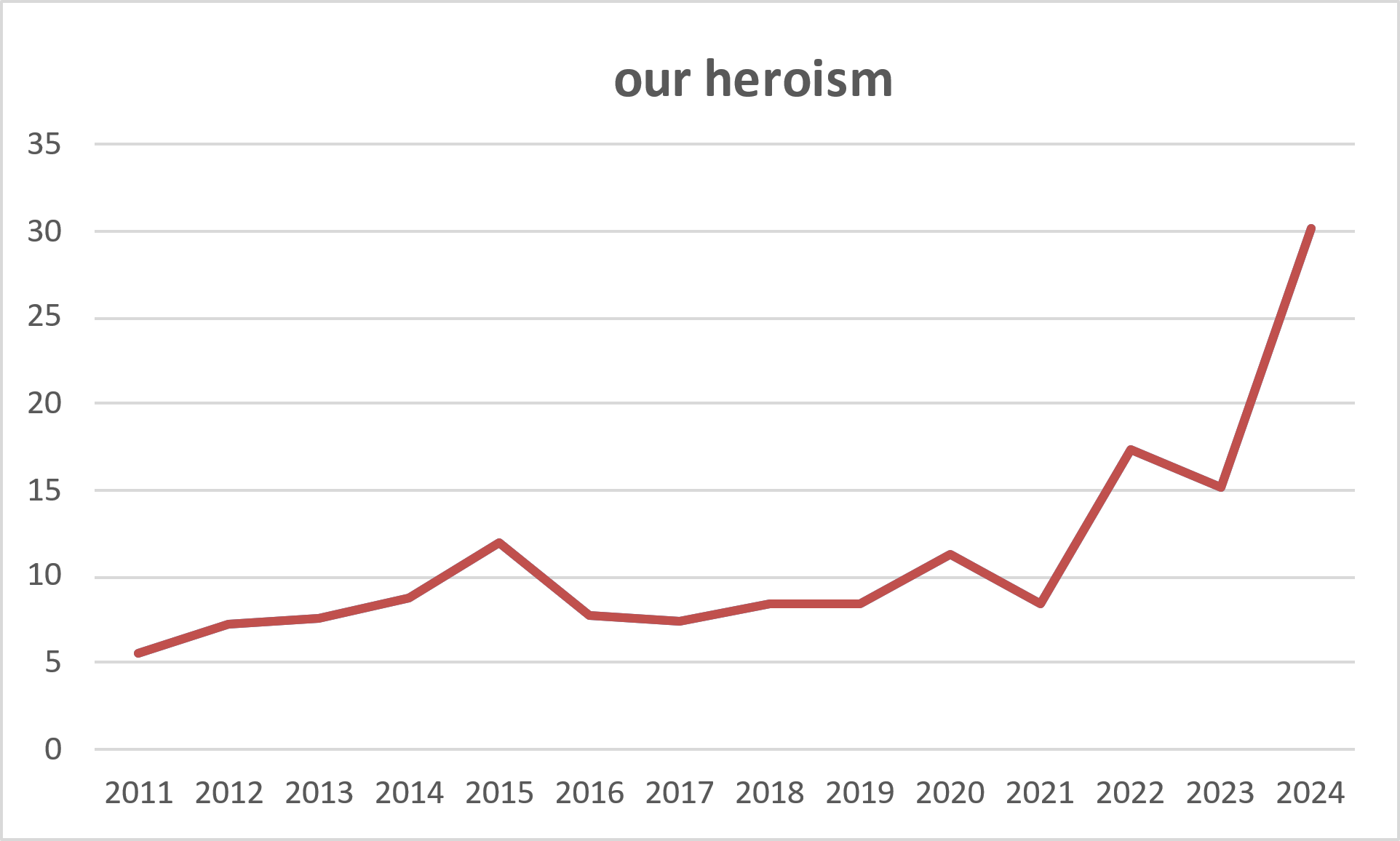
| our heroism / наш героизм | “российские герои” или “наш героизм” или “героизм русских” или “русский героизм” или “героизм наших” |
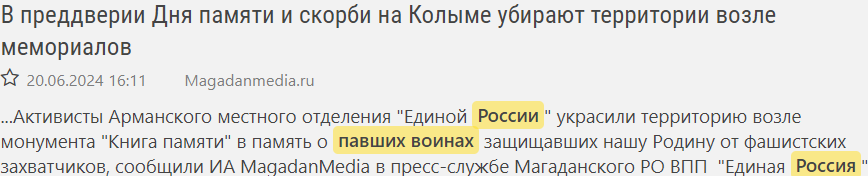
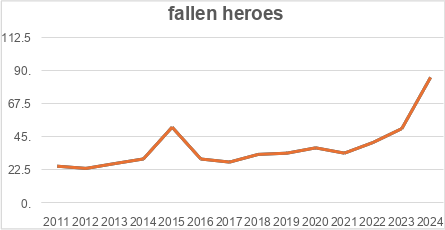
| fallen heroes / павшие герои | “павшие герои” или “павшие воины” или “павшие солдаты” или “павшие защитники” |
| heroic death / геройская смерть | “смертью храбрых” или “геройская смерть” или “героическая смерть” |
Table 24. Frequency of concepts “our heroism”, “fallen heroes”, and “heroic death” by year (number of relevant documents)#
| Year | Our Heroism | Fallen Heroes | Heroic Death |
|---|---|---|---|
| 2011 | 1136 | 5226 | 1836 |
| 2012 | 1838 | 6138 | 2068 |
| 2013 | 2349 | 8414 | 2441 |
| 2014 | 2986 | 10291 | 3107 |
| 2015 | 4337 | 18877 | 4590 |
| 2016 | 2923 | 11427 | 3524 |
| 2017 | 2836 | 10846 | 2835 |
| 2018 | 3852 | 15294 | 4142 |
| 2019 | 3901 | 15954 | 4459 |
| 2020 | 6004 | 20254 | 6321 |
| 2021 | 4368 | 17920 | 3801 |
| 2022 | 8300 | 19975 | 6756 |
| 2023 | 6866 | 23107 | 6980 |
| 2024 | 9302 | 26458 | 26458 |
Examples of the relevant documents#
Pic. 32#

Pic. 33#

Pic. 34#
Relative frequency of concepts#
Diag. 31. Our heroism#
Diag. 32. Fallen heroes#
Diag. 33. Heroic death#
Sign 12. Machismo, sexism, rejection of a non-standard sexual behavior / Мачизм, сексизм, неприятие нестандартного сексуального поведения#
Table 25#
| Concept | Search query |
|---|---|
| LGBT /ЛГБТ | лгбт* |
| stronger sex / сильный пол | stronger sex / сильный пол |
| weaker sex / слабый пол | “слабый пол” |
| sex and erotica / секс и эротика | секс* или эроти* |
Table 26. Frequency of concepts “LGBT”, “stronger sex”, “weaker sex”, and “sex and erotica” by year (number of relevant documents)#
| Year | LGBT | Stronger Sex | Weaker Sex | Sex and Erotica |
|---|---|---|---|---|
| 2011 | 3024 | 10163 | 9065 | 203046 |
| 2012 | 13305 | 11371 | 10945 | 226024 |
| 2013 | 27560 | 14216 | 12566 | 272987 |
| 2014 | 14955 | 13763 | 11545 | 240393 |
| 2015 | 17772 | 13916 | 12429 | 227614 |
| 2016 | 16907 | 14146 | 12120 | 258412 |
| 2017 | 20812 | 15177 | 11632 | 284870 |
| 2018 | 20783 | 17858 | 14140 | 364636 |
| 2019 | 27167 | 22282 | 15212 | 374261 |
| 2020 | 33528 | 21664 | 14927 | 378611 |
| 2021 | 46684 | 17300 | 11734 | 340419 |
| 2022 | 51208 | 16130 | 9509 | 279839 |
| 2023 | 57241 | 13300 | 8033 | 232161 |
| 2024 | 82018 | 11467 | 6634 | 207636 |
Examples of the relevant documents#
Pic. 35#

Pic. 36#

Pic. 37#

Pic. 38#

Relative frequency of concepts#
Diag. 34. LGBT#
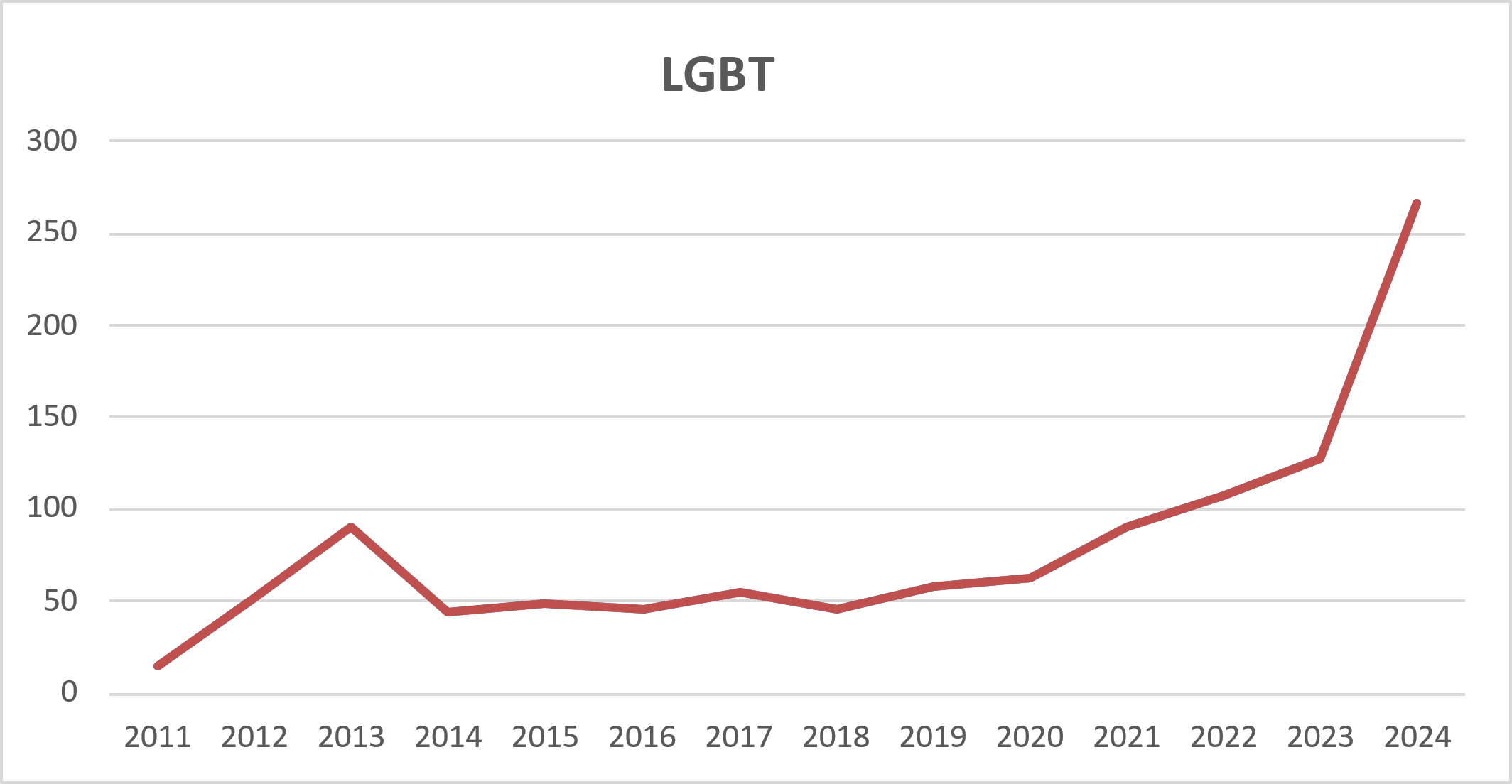
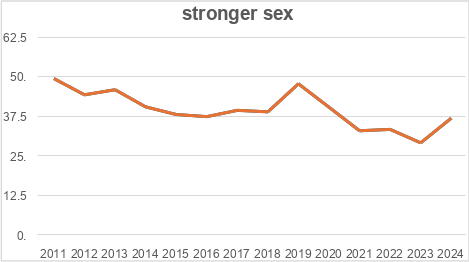
Diag. 35. Stronger sex#
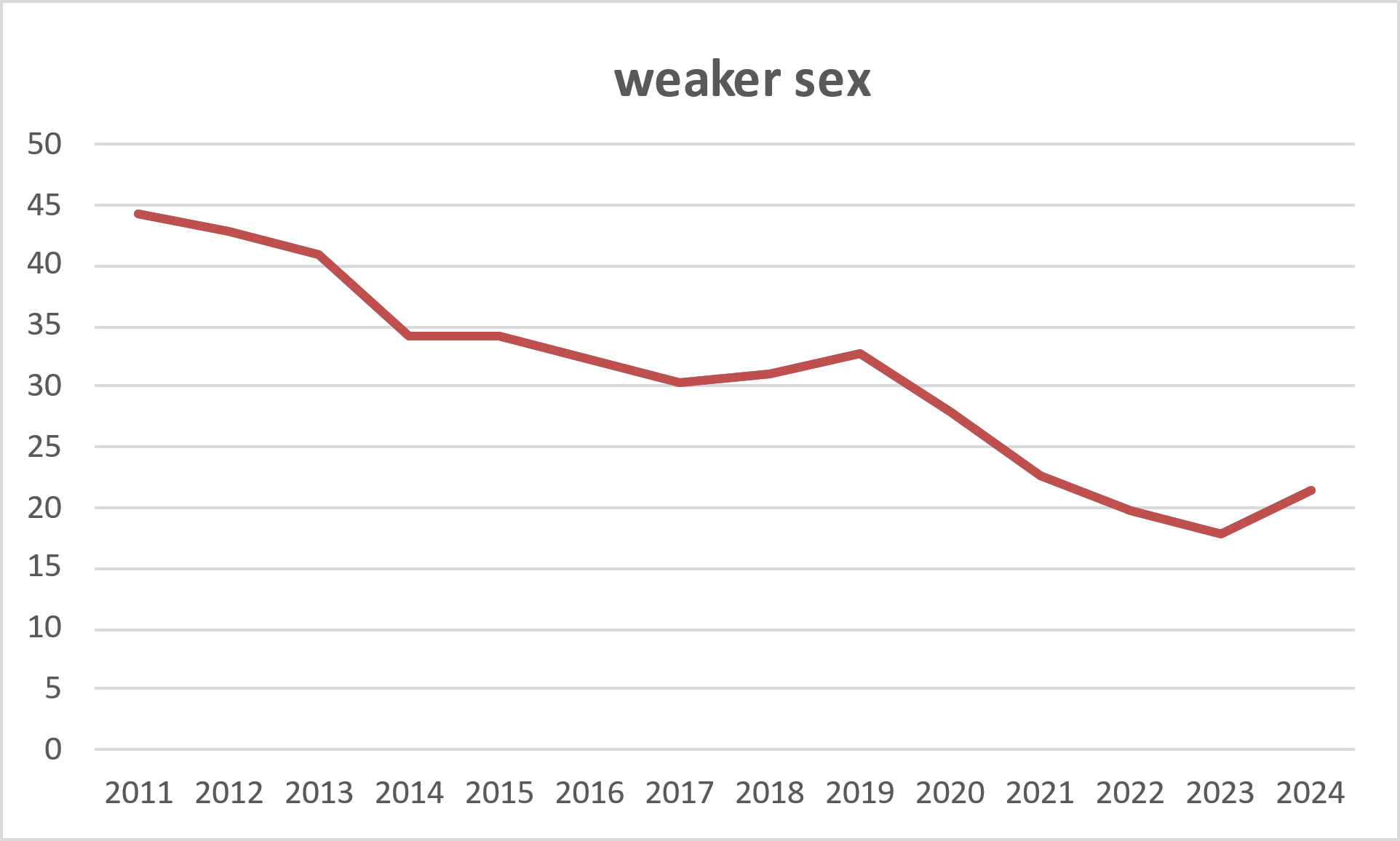
Diag. 36. Weaker sex#
Diag. 37. Sex and erotica#
Sign 13. Individuals are treated as a single nation whose will is expressed by a supreme leader; rejection of parliamentarism / Индивидуумы воспринимаются как единый народ, чью волю выражает верховный лидер; неприятие парламентаризма#
Table 27#
| Concept | Search query |
|---|---|
| national leader / национальный лидер | (“национальный лидер” или “наш лидер” или вождь или “лидер нации”) (путин или “наш президент” или “российский президент” или “президент России”) /n |
| unity of Russians / единство россиян | “все россияне” или “все жители Росси*” или “все граждане Росси*” или “все жители нашей страны” или “все граждане нашей страны” |
| Imitative parliamentarism — parliamentary unanimity / имитационный парламентаризм — парламентское единодушие | (“российский парламент” или Дума или думский или “Совет Федерации”) (единодуш* или “большинство голосов”) (проголосовал или одобрил или поддержал или “высказался за”) /n |
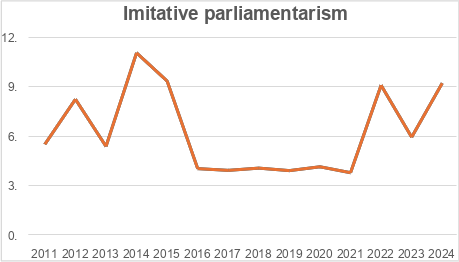
Table 28. Frequency of concepts “national leader”, “unity of Russians”, and “imitative parliamentarism — parliamentary unanimity” by year (number of relevant documents)#
| Year | National Leader | Unity of Russians | Imitative Parliamentarism |
|---|---|---|---|
| 2011 | 3895 | 14037 | 1136 |
| 2012 | 3530 | 15130 | 2114 |
| 2013 | 1751 | 18805 | 1671 |
| 2014 | 3225 | 22397 | 3748 |
| 2015 | 2976 | 24091 | 3407 |
| 2016 | 3469 | 23490 | 1531 |
| 2017 | 3376 | 23346 | 1520 |
| 2018 | 4186 | 36347 | 1872 |
| 2019 | 2766 | 36365 | 1835 |
| 2020 | 2581 | 61592 | 2233 |
| 2021 | 2442 | 52793 | 1995 |
| 2022 | 3436 | 50308 | 4379 |
| 2023 | 4601 | 41657 | 2708 |
| 2024 | 8350 | 43615 | 2856 |
Examples of the relevant documents#
Pic. 39#

Pic. 40#

Pic. 41#

Relative frequency of concepts#
Diag. 38. National leader#
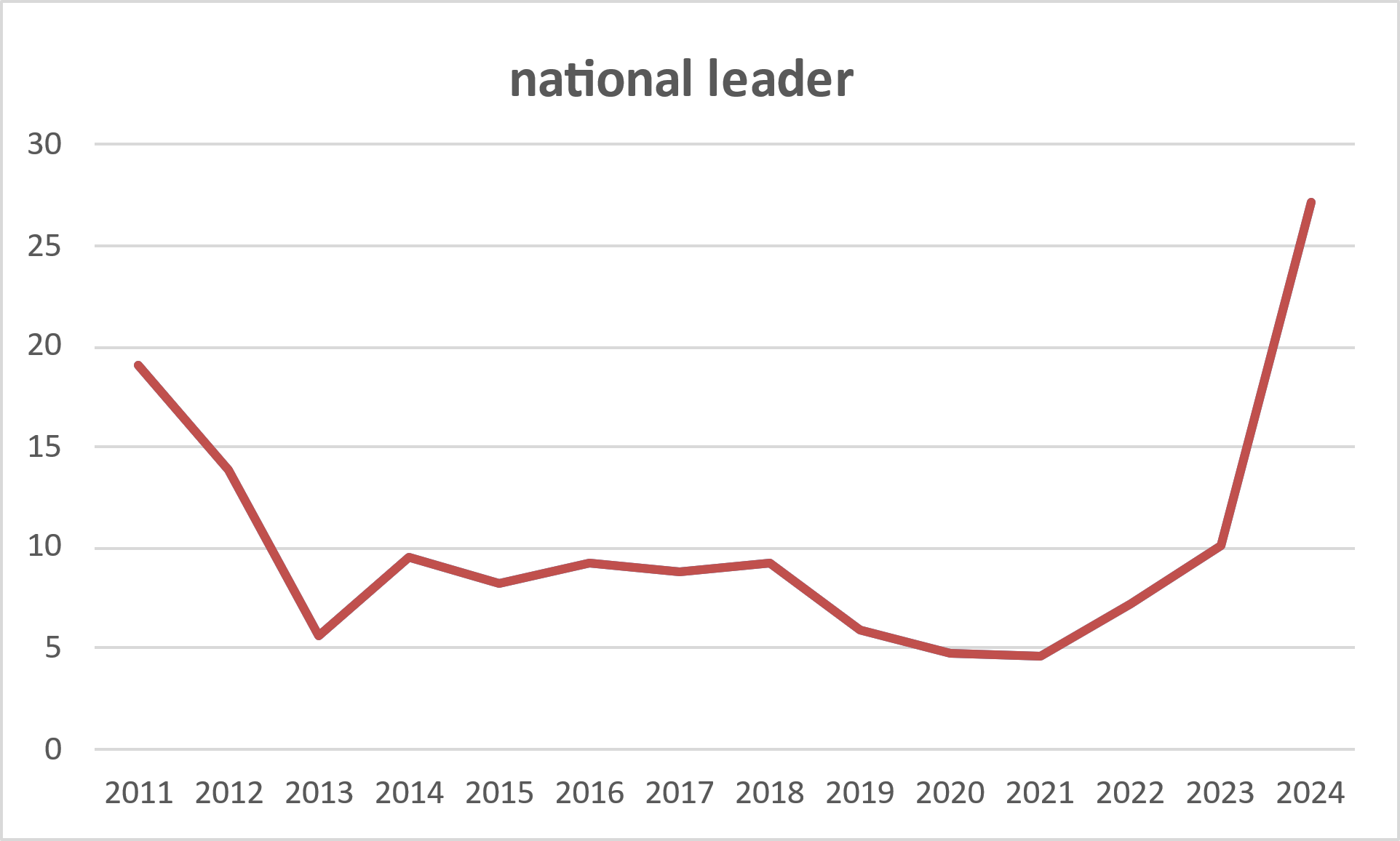
Diag. 39. Unity of Russians#
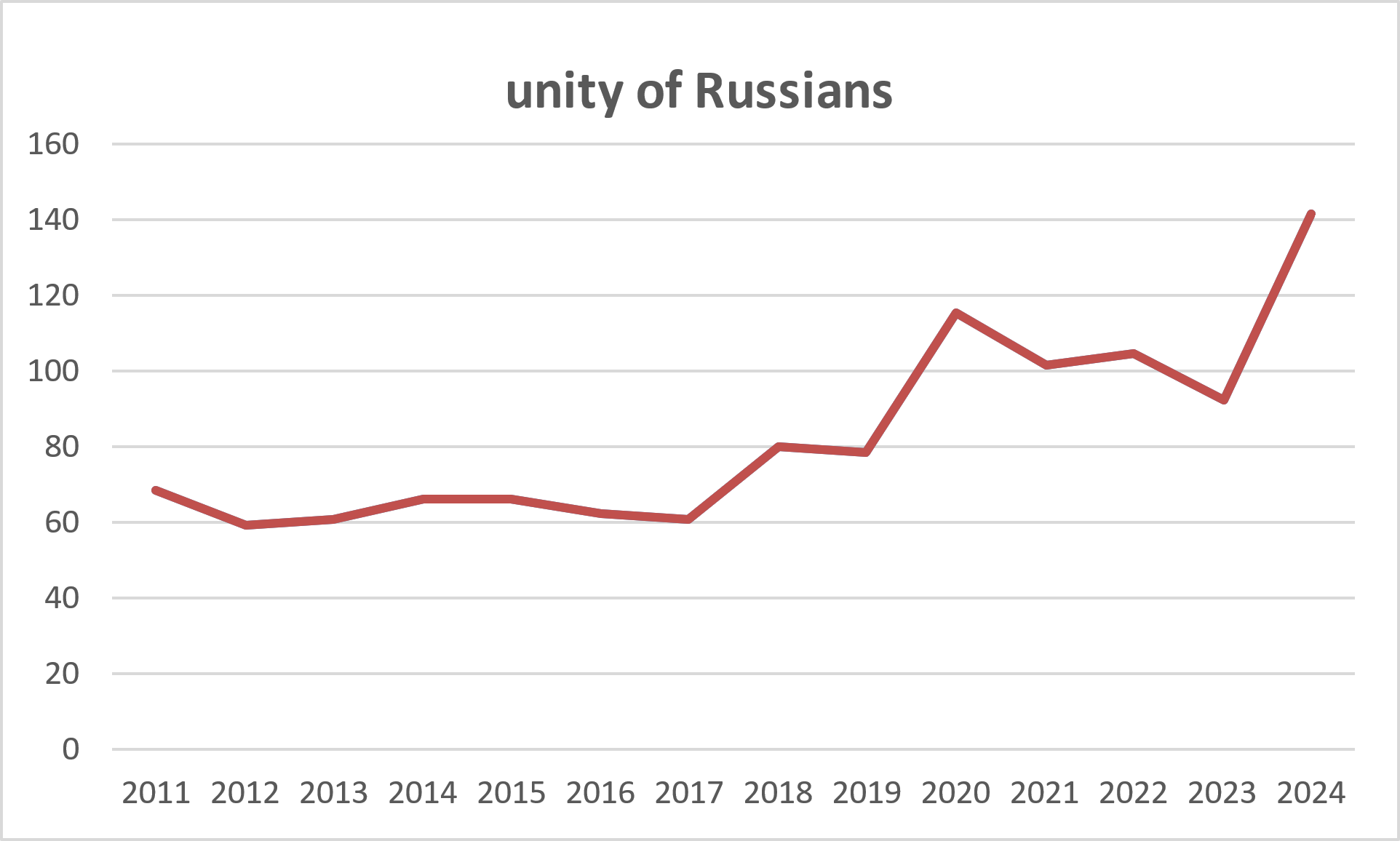
Diag. 40. Imitative parliamentarism#
Sign 14. Usage of Newspeak / Использование новояза#
Table 29#
| Concept | Search query |
|---|---|
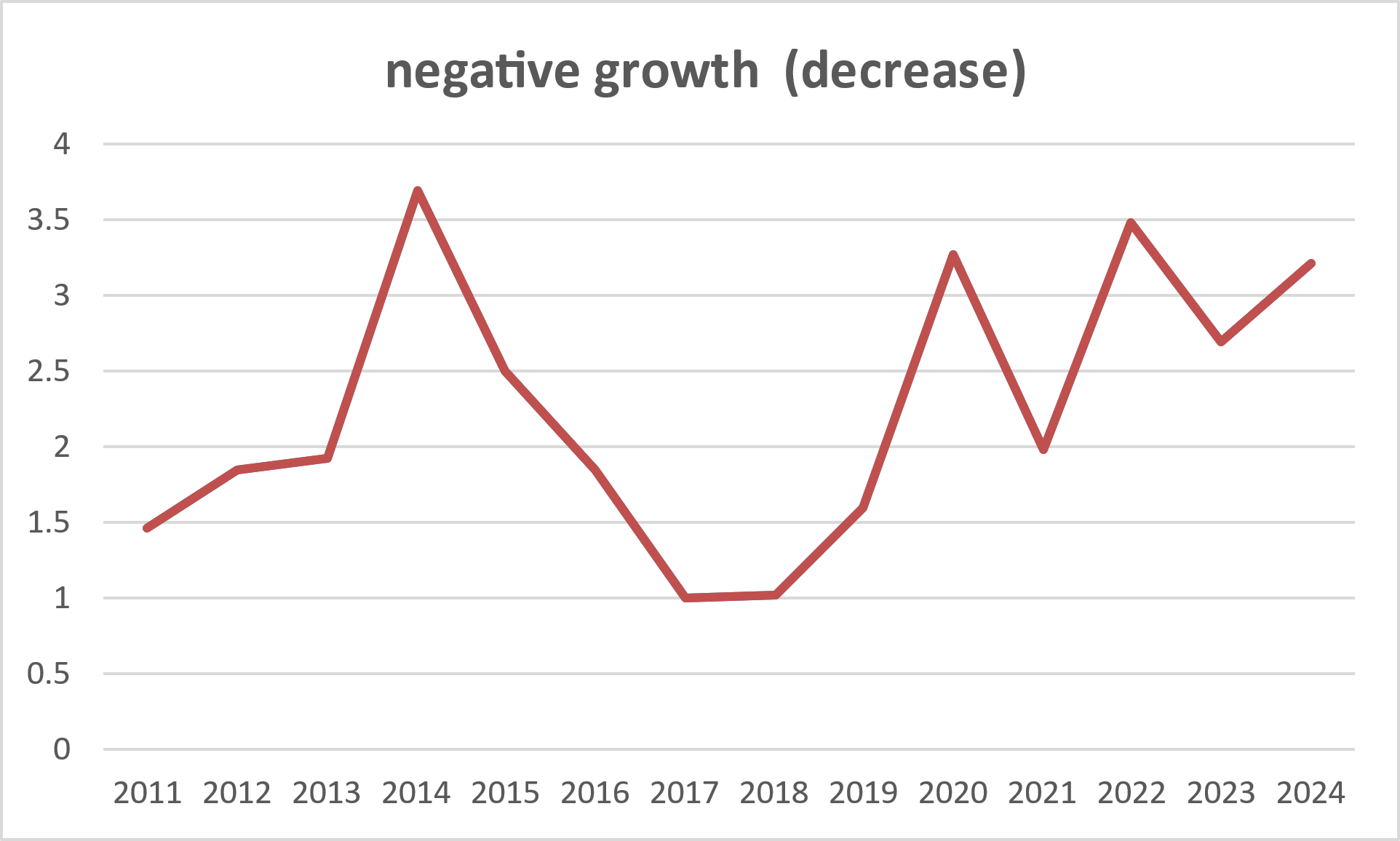
| negative growth (decrease) / отрицательный рост (снижение) | “отрицательный рост” |
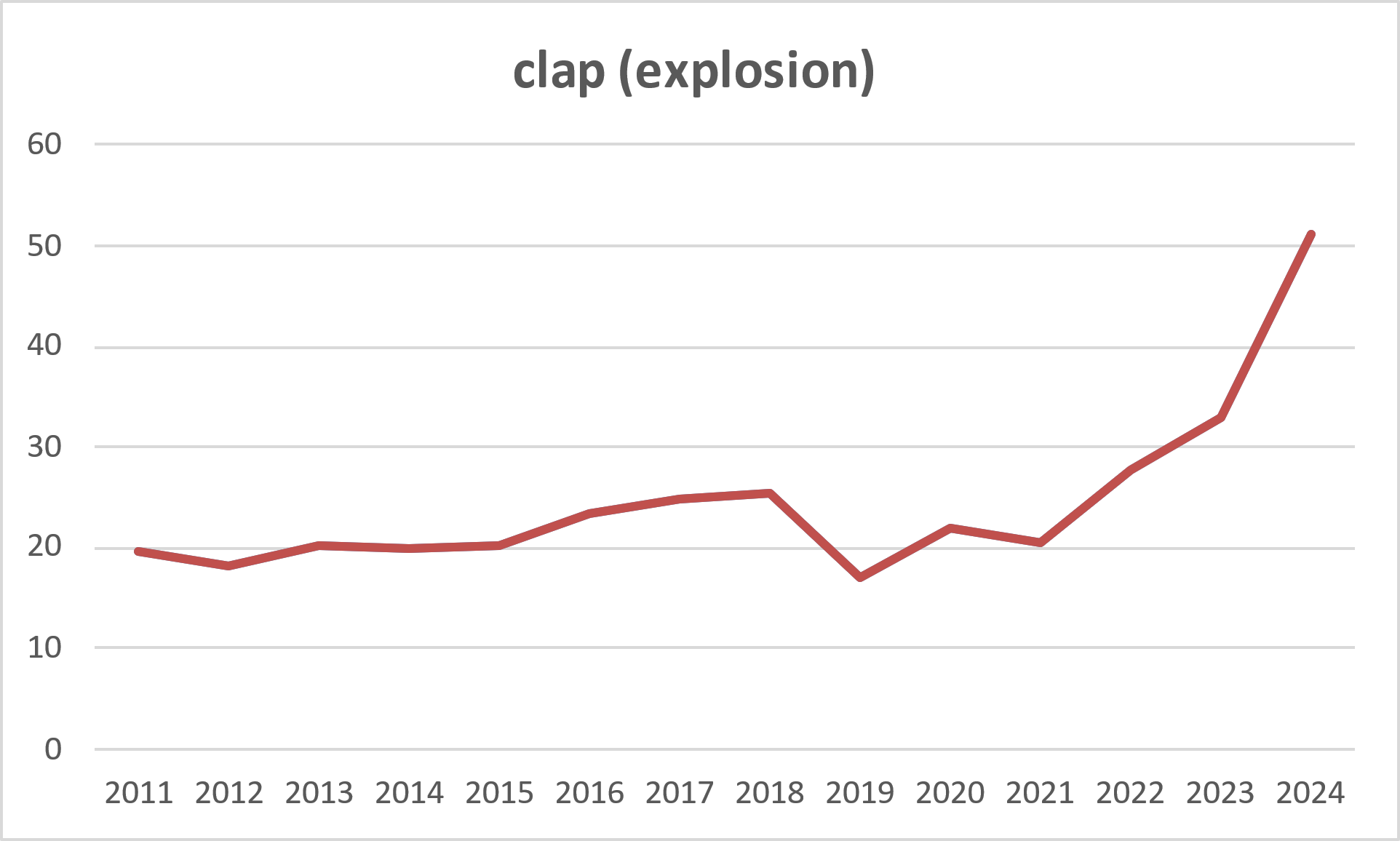
| clap (explosion ) / хлопок (взрыв) | хлопки (слышать или услышать или “сообщить о” или фиксировать или зафиксировать или слышны) /n |
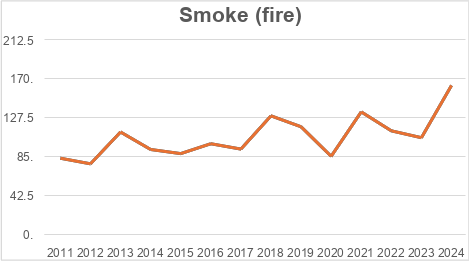
| Smoke (fire) / задымление | задымление (пожар) |
Table 30. Frequency of concepts “negative growth (decrease)”, “clap / explosion”, and “smoke (fire)” by year (number of relevant documents)#
| Year | Negative Growth (Decrease) | Clap / Explosion | Smoke (Fire) |
|---|---|---|---|
| 2011 | 298 | 3994 | 17189 |
| 2012 | 472 | 4616 | 19886 |
| 2013 | 593 | 6212 | 34686 |
| 2014 | 1248 | 6734 | 31607 |
| 2015 | 907 | 7361 | 32327 |
| 2016 | 692 | 8752 | 37505 |
| 2017 | 380 | 9512 | 35982 |
| 2018 | 465 | 11627 | 59407 |
| 2019 | 743 | 7955 | 54923 |
| 2020 | 1741 | 11660 | 45927 |
| 2021 | 1033 | 10667 | 70159 |
| 2022 | 1671 | 13259 | 54654 |
| 2023 | 1218 | 14880 | 48177 |
| 2024 | 991 | 15739 | 50448 |
Examples of the relevant documents#
Pic. 42#

Pic. 43#

Pic. 44#

Relative frequency of concepts#
Diag. 41. Negative growth (decrease)#
Diag. 42. Clap (explosion)#
Diag. 43. Smoke (fire)#
Words related to Newspeak have been increasingly used in the passive voice.
Table 31. Number of relative documents and relative frequency of found documents with passive voice (“зафиксированы прилеты”)#
| Year | Number of Relevant Documents | Relative Frequency |
|---|---|---|
| 2021 | 44 | 0.08459 |
| 2022 | 2128 | 4.444457 |
| 2023 | 1853 | 4.101147 |
| 2024 | 3384 | 10.98757 |
Diag. 44. Passive voice: зафиксированы прилеты#
Appendix 2. Main events 2011–2023 according to RIA Novosti#
Table 32#
| Year | Events |
|---|---|
| 2011 | |
| Announcement of the future “castling” of Putin and Medvedev (September) | |
| Duma elections (December) | |
| Demonstrations on Bolotnaya Square (December) | |
| 2012 | |
| Presidential elections in Russia (March) | |
| Opposition rallies (February, March, May, June, September, October) | |
| Pussy Riot trial (Summer) | |
| 2013 | |
| Slowdown in the Russian economy | |
| Civil servants and deputies in elected bodies must get rid of foreign assets (May) | |
| Law banning gay propaganda among children (June) | |
| Snowden’s theft of classified files and escape (Summer) | |
| 2014 | |
| Crimea joins Russia | |
| Western sanctions against Russia and Russian counter-sanctions | |
| Sochi Olympics (February) | |
| Minsk agreements (September) | |
| Change of power and special operations in Ukraine (February-May) | |
| Falling ruble due to falling global oil prices | |
| 2015 | |
| Countries of the Normandy Four reach an agreement on settlement in Ukraine (February) | |
| Migration crisis in Europe (May) | |
| Celebration of the 70th anniversary of the Victory in the Great Patriotic War (May) | |
| Patriotic “stop list” of 12 foreign and international organizations whose activities are undesirable in Russia (Summer) | |
| V. Putin signed a law limiting the maximum possible share of foreign shareholders in the capital of Russian mass media to 20% (October) | |
| 2016 | |
| Ukrainian Prime Minister Yatsenyuk resigns (April) | |
| UK referendum on BREXIT (June) | |
| Yarovaya Act obliging telecom operators to store information about users’ conversations and correspondence (June) | |
| Creation of Rosgvardia (July) | |
| State Duma elections (September) | |
| Installation of a monument to Prince Vladimir in Moscow (November) | |
| Trump’s election (November) | |
| 2017 | |
| Transfer of St. Isaac’s Cathedral to the Russian Orthodox Church (January) | |
| Investigation of Russia’s “interference” in the U.S. election (March) | |
| Visa-free entry to the EU for citizens of Georgia and Ukraine (April) | |
| Ban on anonymizers in Russia (July) | |
| Seventh Studio case and arrest of director K. Serebrennikov (August) | |
| V. Putin signed the law on foreign media agents (November) | |
| 2018 | |
| V. Putin presented the latest Russian military innovations (March) | |
| UK accused Moscow of poisoning the Skripals (March) | |
| President Putin’s re-election (March) | |
| Construction of the Nord Stream-2 gas pipeline begins (May) | |
| Opening of the Crimean Bridge (May) | |
| Raising the retirement age in Russia (October) | |
| 2019 | |
| New Russian laws on Internet regulation (May) | |
| V. Zelensky wins the presidential election in Ukraine (Spring) | |
| Opposition rallies in Moscow (Summer) | |
| Fadeev replaces Fedotov as head of the Presidential Human Rights Council (October) | |
| Suspension of Russian athletes from international competitions (December) | |
| 2020 | |
| COVID-19 | |
| Elections in Belarus and opposition protests (August) | |
| Joe Biden’s victory (November) | |
| Military action in Nagorno-Karabakh (fall) | |
| 2021 | |
| Storming of the Capitol splits the U.S. (January) | |
| Putin argues that moderate conservatism is the most sensible course of action (October) | |
| Americans flee Afghanistan (August) | |
| Western media published articles attributing plans for Russia to “invade Ukraine” (November) | |
| 2022 | |
| Suppression of a coup attempt in Kazakhstan (January) | |
| Launch of a “special military operation” in Ukraine (February) | |
| Partial mobilization in Russia (September) | |
| Russia adds four new regions (September) | |
| Russia’s reflection on Western sanctions | |
| 2023 | |
| Heroic capture of Bakhmut and Maryinka | |
| Overcoming sanctions and record growth of the Russian economy | |
| BRICS expansion | |
| Russia becomes a leader in drone production | |
| Wagner mutiny and Prigozhin’s death (summer) | |
| Changes in Russian schools: withdrawal from the Bologna system, new history textbook, schools required to sing the anthem | |
| Nagorno-Karabakh became fully Azerbaijani (fall) |
DOI: 10.55167/77a2df541ae0